

005. The Cotton Eye Joe conundrum
Visiting a Material Recovery Facility (MRF) to better understand "where things go"

If you were alive in the 1990’s, then I am sure you remember that annoying but catchy song “Cotton Eye Joe”. Where did you come from, where did you go? Where did you come from, Cotton Eye Joe? I bet you are humming it now, aren’t you? (Sorry).
Well unfortunately — as someone who is a passionate believer in the circular economy — it’s something I can’t get out of my head. No, not the song, thankfully. But the concept of where things come from and where things go.
It can be quite a conundrum, especially living in a developed or higher income country, far removed from where most resources are extracted, where most products are manufactured and where they end up at the end of their life.
Because of this luxury, we tend not to dwell too much about our place in the life cycle of most (if not all) products we use. We tend to buy an item online or off the shelf of any store, use or consume it for a fairly short amount of time, and then send it (and its single-use packaging) on its merry way into the garbage can or recycling bin.
Then it just goes away.
Out of sight, out of mind.
But for this post, I want to propose a twist on that phrase. How about “in sight, in mind” instead?
I remember reading something many years ago that has never really left my brain: Every toothbrush you’ve ever used still exists on the earth.
It’s crazy to think about, right? Even that Care Bears one from 1995?! Yes, even that one. (Read this interesting article from National Geographic if you want to do more research on this topic).
But then of course you naturally start to wonder…what else that I’ve used still exists on the earth? (Spoiler: A LOT).
Take a look at some of these photos and you’ll see what I mean:
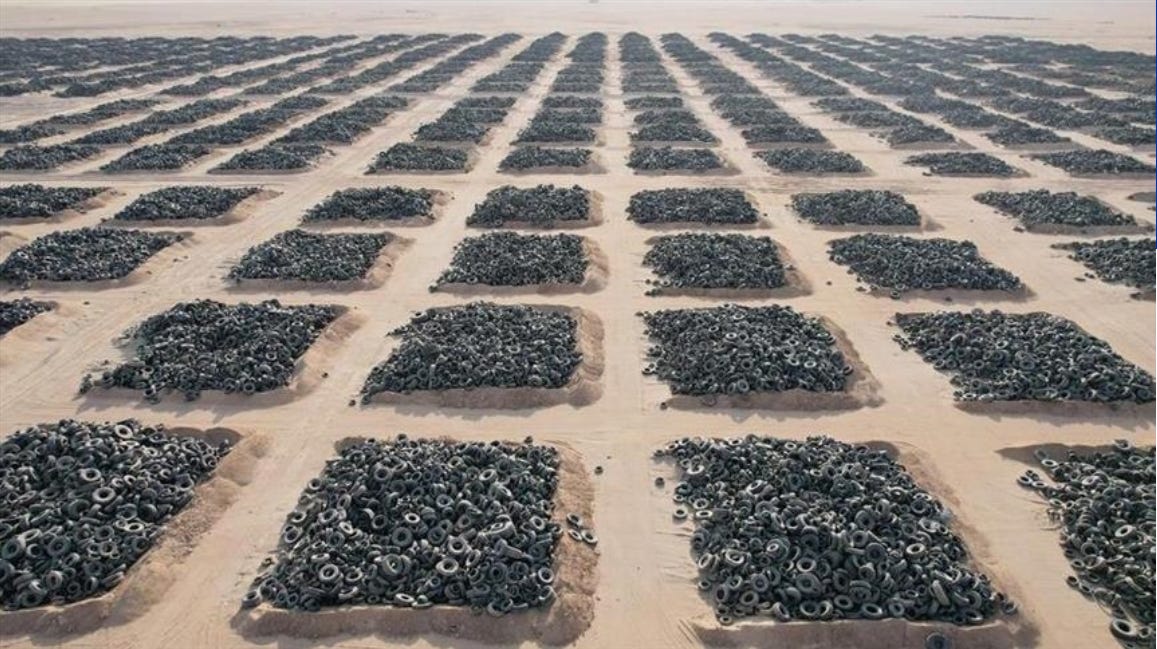
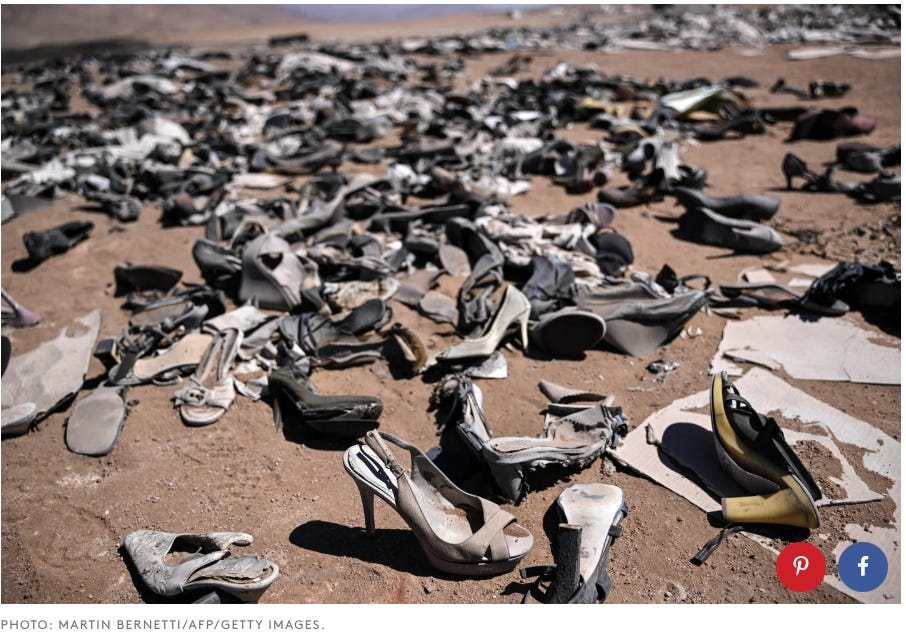
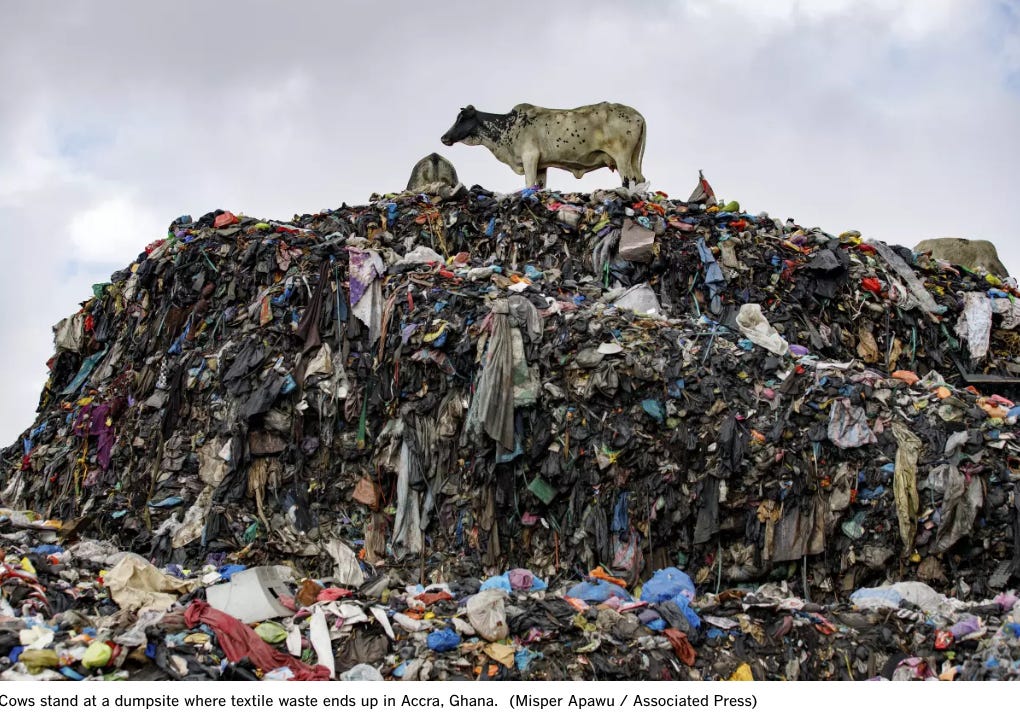
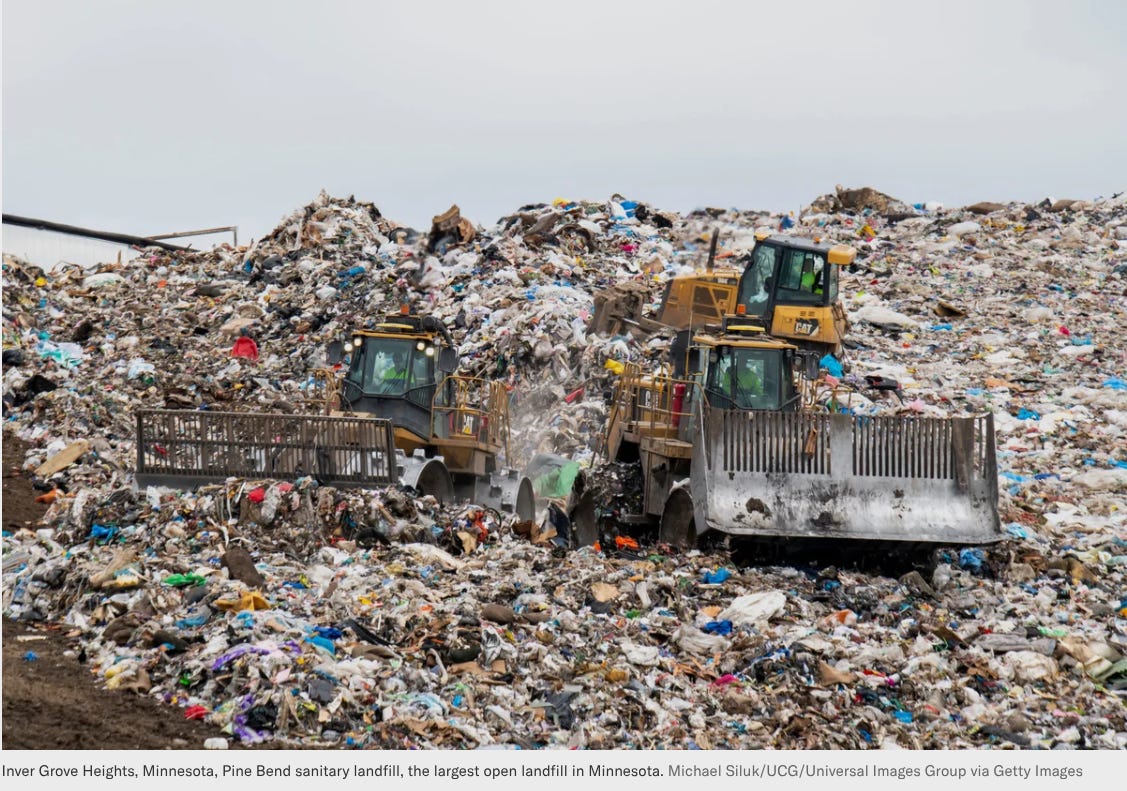
When we throw something “away”, this is what “away” actually looks like.
These photos are obviously quite depressing.
But — and I mean this sincerely — they also give me hope about the glaring opportunities that are right in front of us.
I guess you could say it feels like the classic opener of a Shark Tank pitch: “There’s gotta be a better way.”
Great ideas aren’t built on perfect systems. They’re built on flawed ones filled with gaps.
We just need more people to be aware. To see the problem. To feel the impact.
To realize there isn’t an “away”.
And then to take action to improve the system.
“Nice speech, Jenny. But don’t we have to understand the current systems before we can change them?”
Ah, I’m so glad you asked. Come with me…
Touring a Material Recovery Facility (MRF)
About a month ago, I joined a tour of a local Material Recovery Facility, or a MRF (pronounced Murf, like Smurf, not M-R-F) so I could get a firsthand understanding of our most prominent existing system to recapture and repurpose waste: recycling.
The first thing I’ll say about it was that I had found *my people*. The tour was supposed to be an hour, but the 10 or so of us ended up staying almost 3 hours (and could have stayed for much longer, asking our endless questions). The person running the tour actually had to kick us out. 😂 We were a passionate bunch, what can I say?
With that, I’ll give you a glimpse into some of the tour highlights and then share some reflections and tidbits I learned along the way.
🚚 Step 1: The Tipping Floor
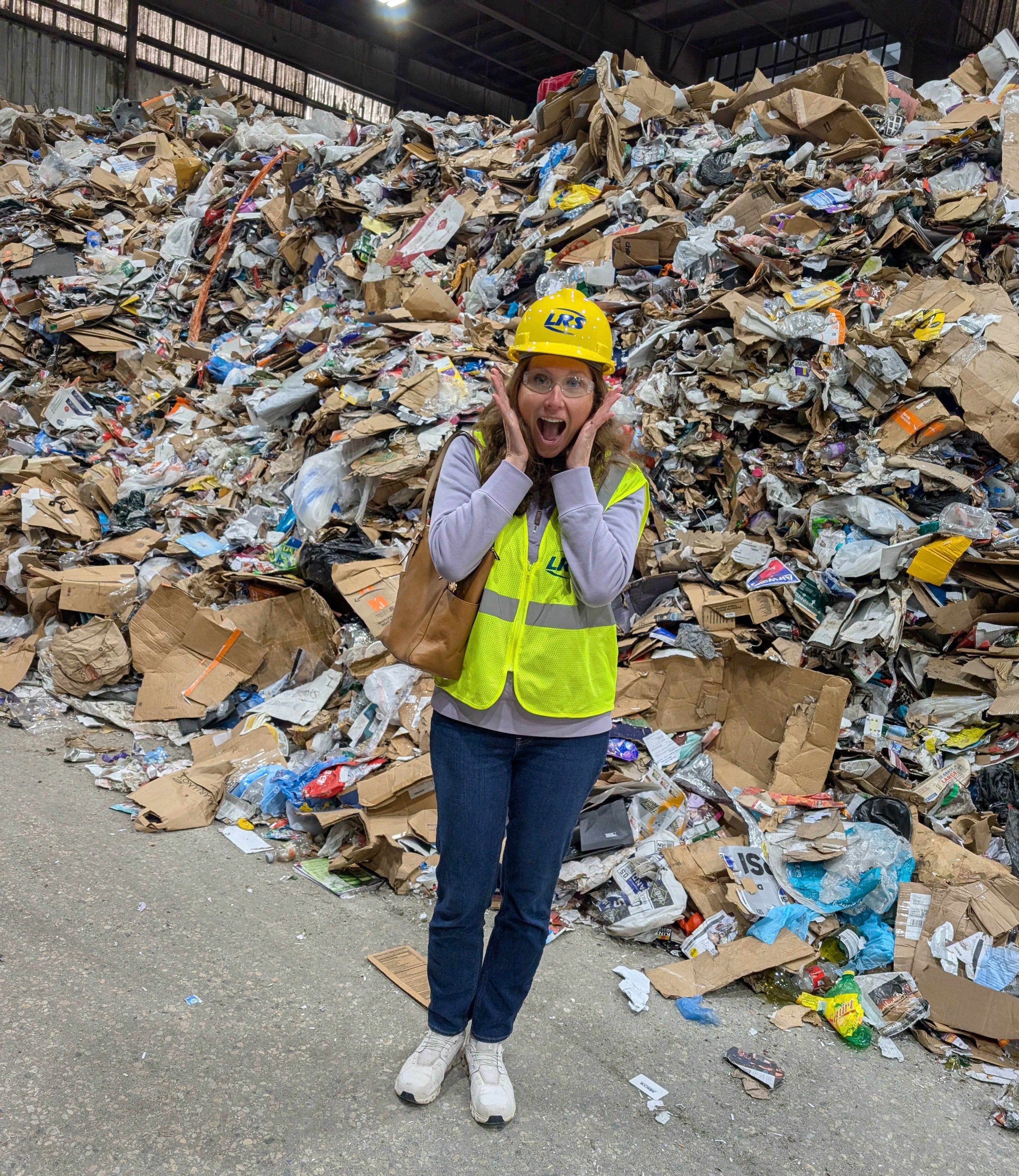
Remember all that stuff you put out in your recycling bin on the curb last week? Well after it goes onto the recycling truck, here’s where it ends up next: in a GIANT pile at your local MRF. It’s called the Tipping Floor because it’s the place where the recycling trucks literally tip their contents out.
Seeing the sheer magnitude of an entire community’s worth of stuff is astounding. This particular facility, located in the Chicago suburbs, sorts 30,000 pounds of materials per hour. But an even larger facility, like the one in Chicago, sorts 1 million pounds per day.
It was really interesting to take a closer look at all the things that ended up on the Tipping Floor. Lots of appropriate and expected things, like cardboard boxes and soda bottles. But also some shoes. And old power cords. And an exercise mat. 🤔
⚙️ Step 2: Machine Sorting
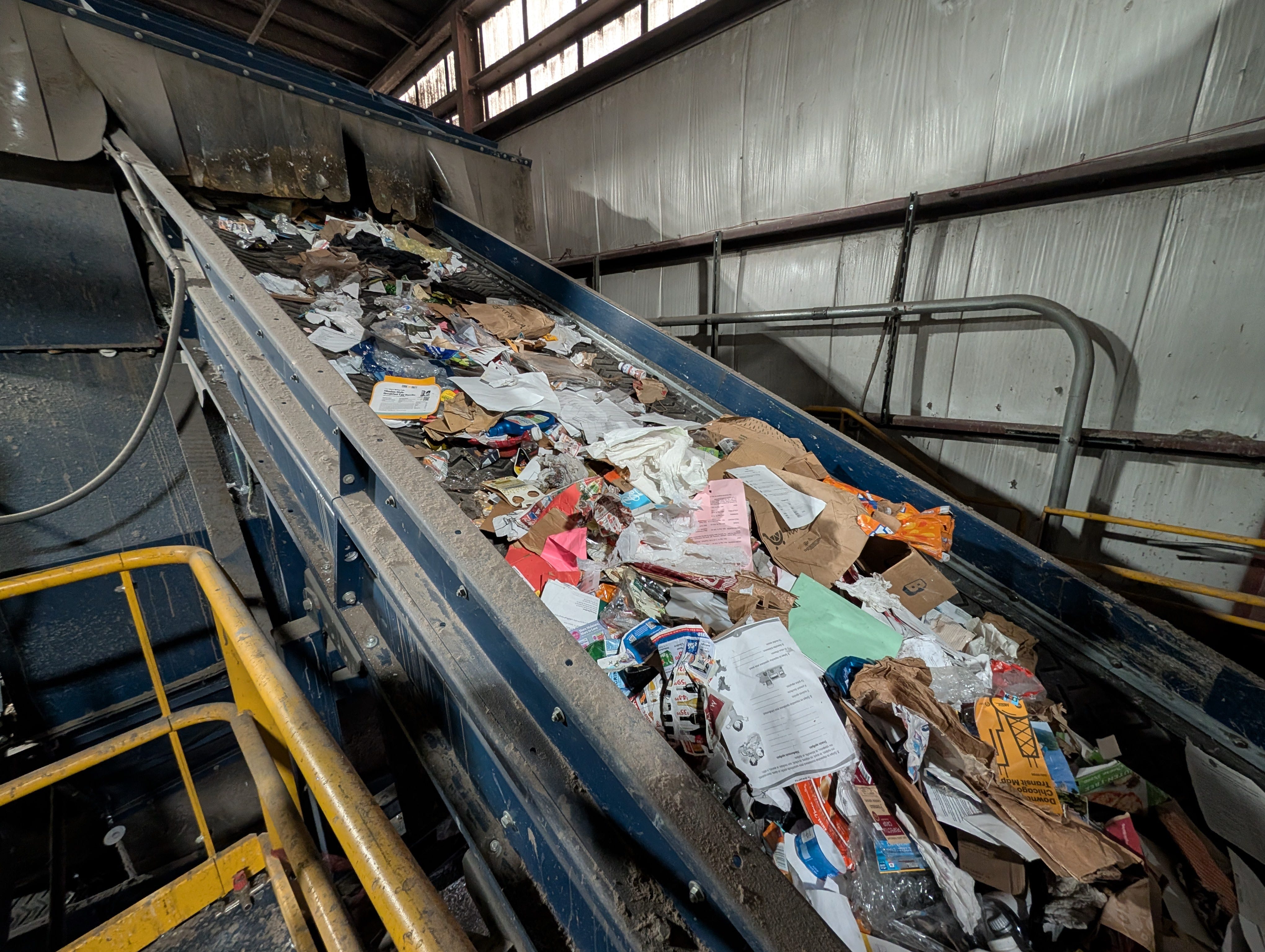
All the stuff from the Tipping Floor then gets fed up a conveyor belt into various sorter machines that can detect what material it is, either through magnets (which attract things like tin cans) or fiber optics (advanced sensors that can detect differences between plastic, paper, etc.). This step is basically an automated first pass at separating the materials by type — and it is super cool to see in person.
One of the *real* reasons (besides our chatty tour group) that our tour ran for almost 3 hours was because the main sorter got jammed by some soft plastic sheeting. That one jam shut down the whole operation for more than 30 minutes, so we had to wait around a while before we could see everything spring back to life.
It was a good lesson that throwing things in the bin that aren’t actually recyclable can have a huge negative impact on the equipment.
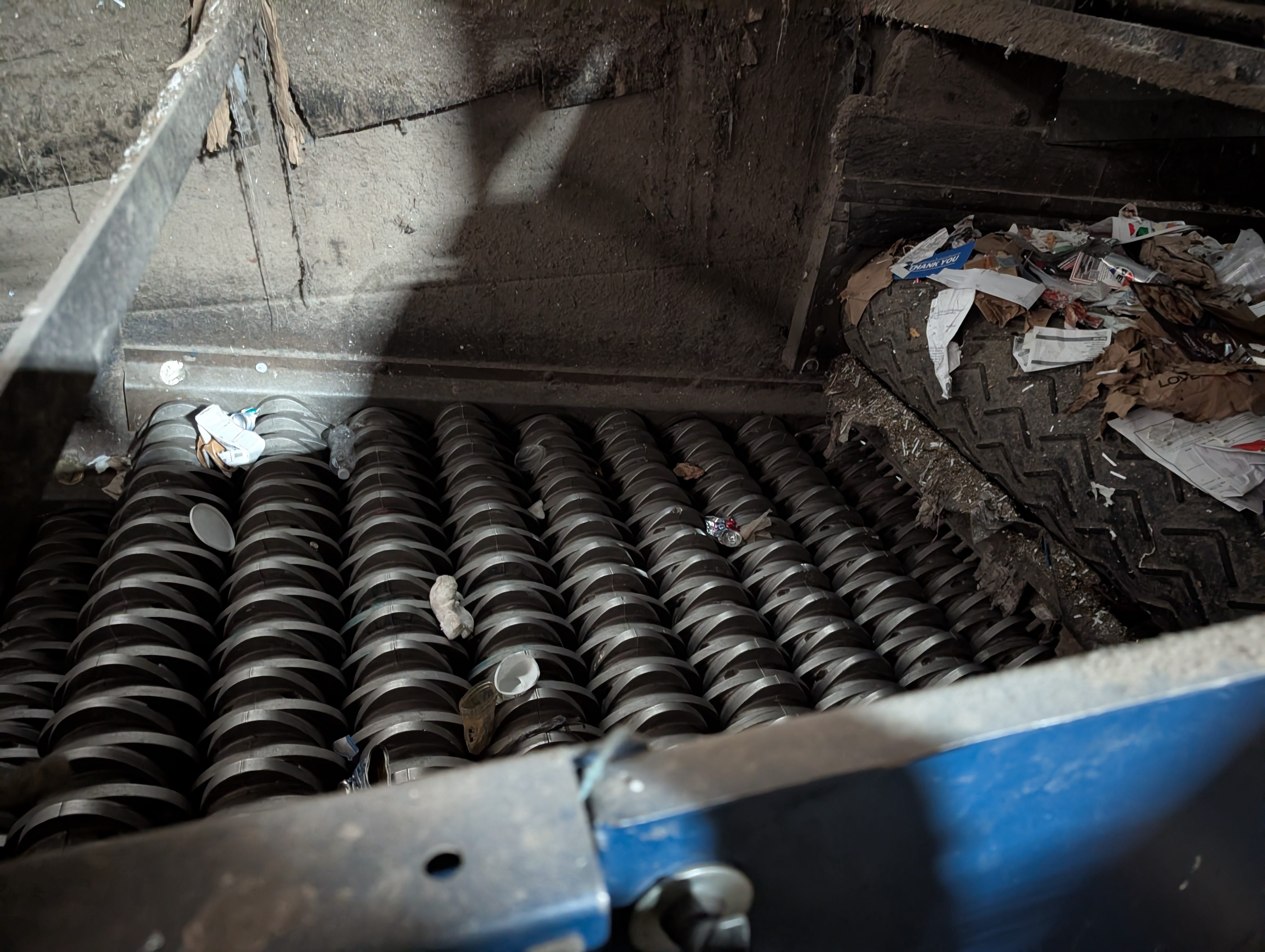
Once it was back up and running, we got to see an Optical Sorter up close. If you look closely, you can see some materials going up, some going down. This particular sorter ejects PET plastics up to a plastics conveyor, sends fiber (paper) down to the paper conveyor, and lets the rest (non-recyclables) pass to trash.
👷🏽 Step 3: Manual Sorting
After the machines do their initial sorting, the materials then pop out onto new, separate conveyor belts according to material type. At this point, workers manually monitor the belts to catch and remove any anomalies that the machines may have missed. It was really fascinating to watch this part in action, so I included two video clips below so you can see it too!
The cardboard conveyor belt:
And the paper conveyor belt:
By the way, can you imagine how fast this person’s eyes and brain have to be moving to constantly process all this information?! I have so much respect. If it were me, I think I’d look more like Lucy and Ethel at the chocolate factory.

📦 Step 4: Making Recovered Materials into Bales
Once the sorting is complete, you can get a much clearer picture of what made the cut (or got “recovered”) and what didn’t. To use a bit of an outdated reference, it’s kind of like the good egg/bad egg meter from the original 1971 version of “Charlie and the Chocolate Factory.”
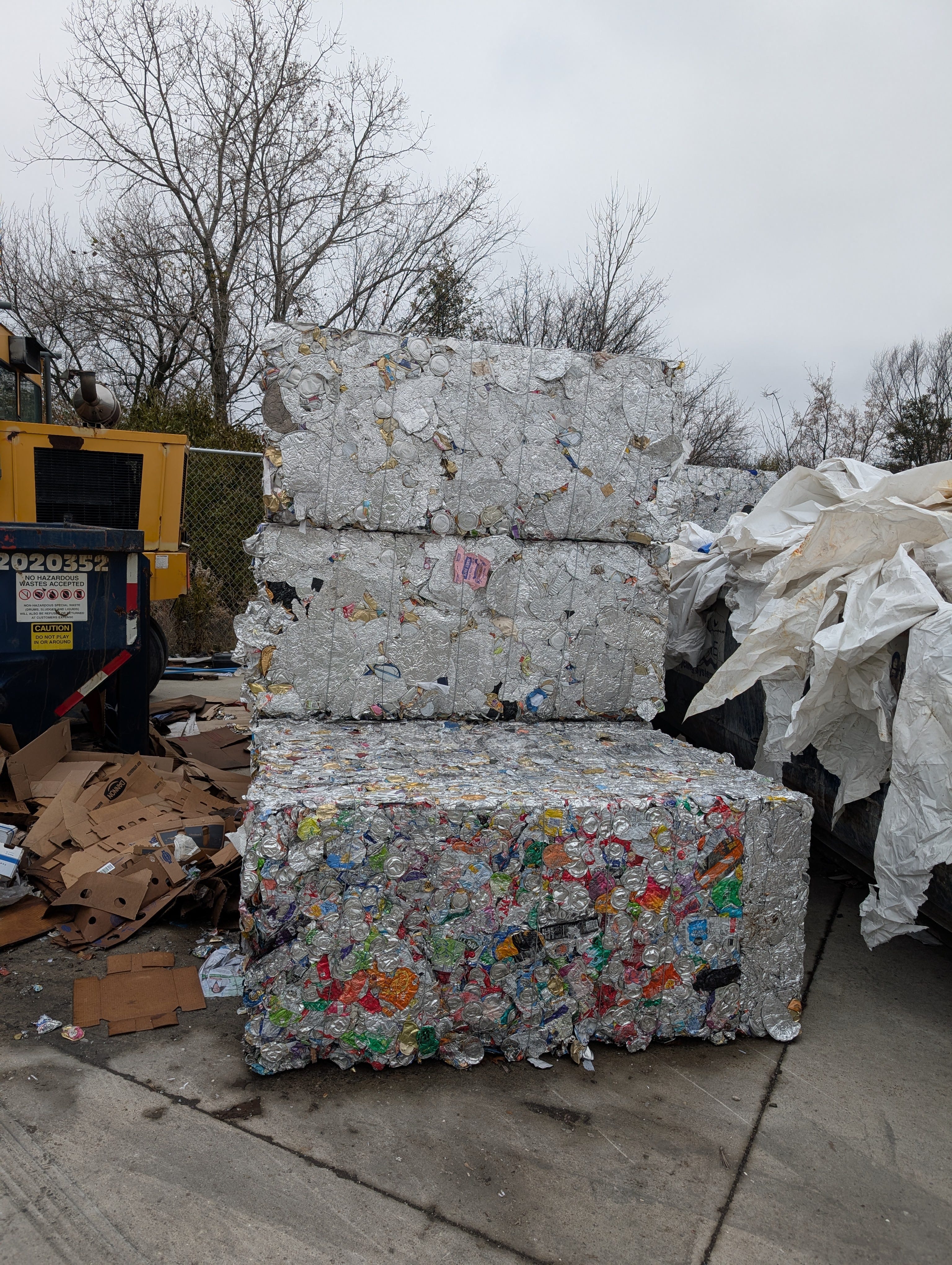
It basically goes from this — a mountain of “good egg”, freshly sorted aluminum cans:
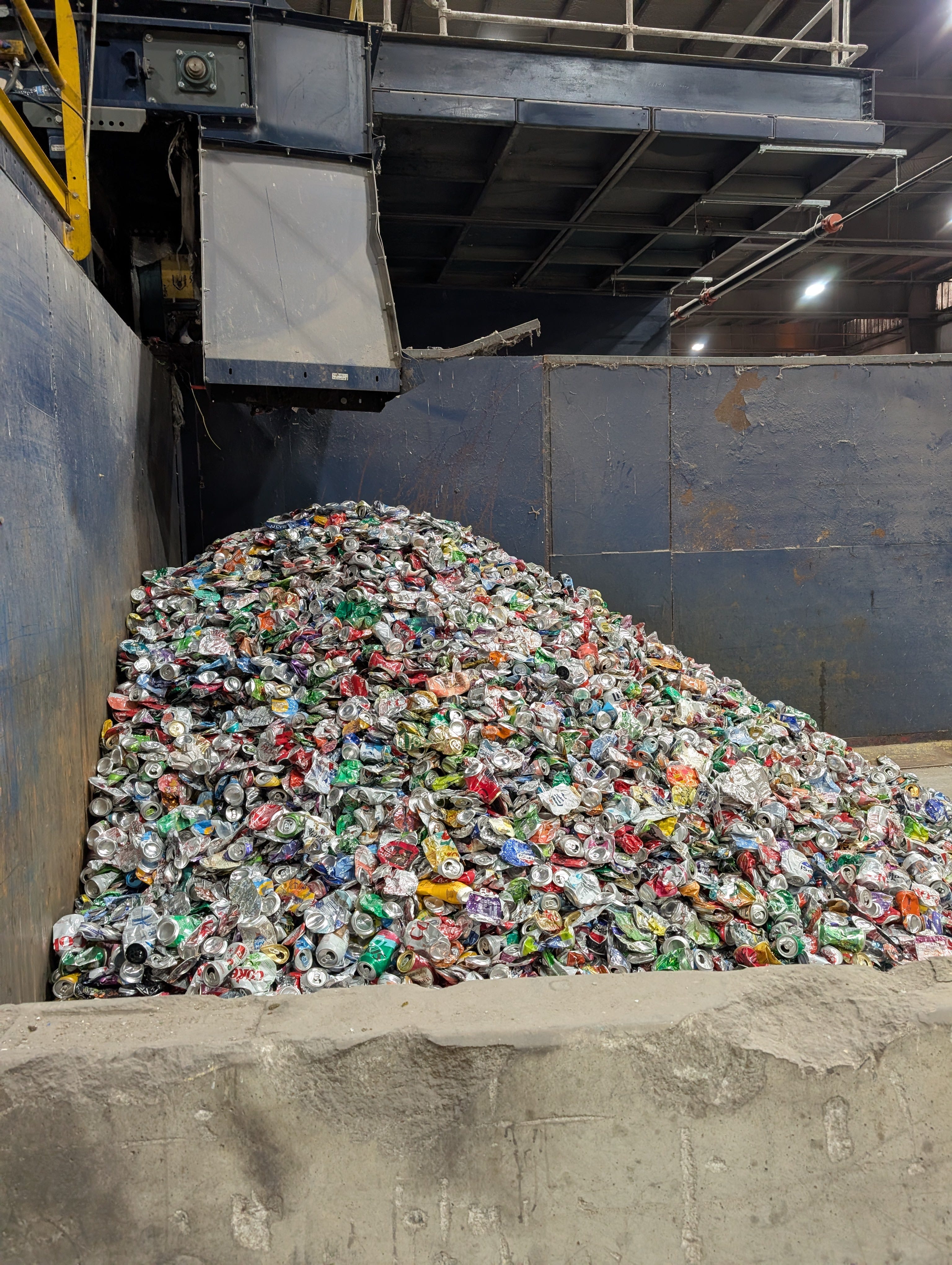
To this — a nice bale of aluminum cans all ready to move on to their next life:
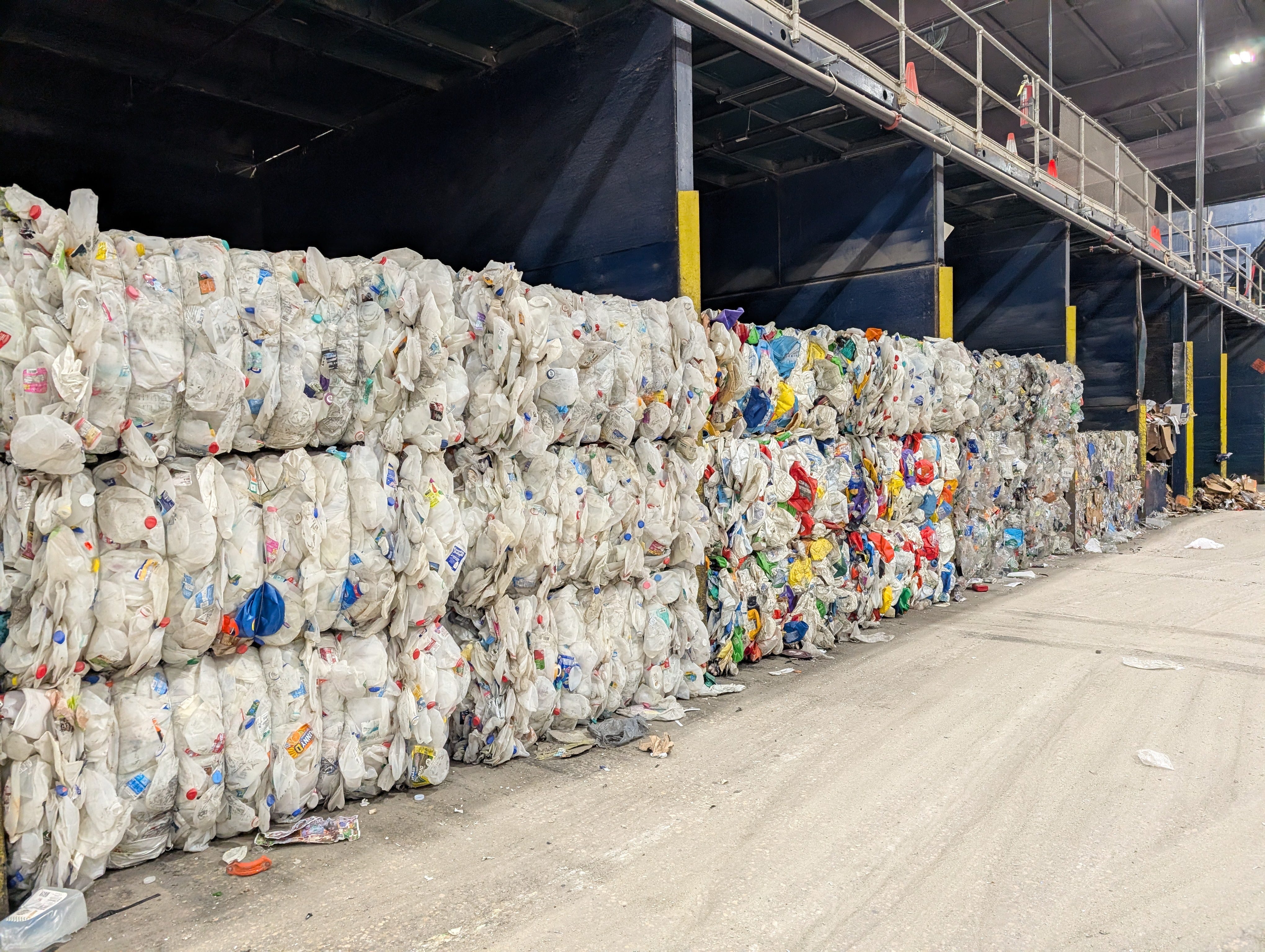
Here are some other examples of the finished bales below.
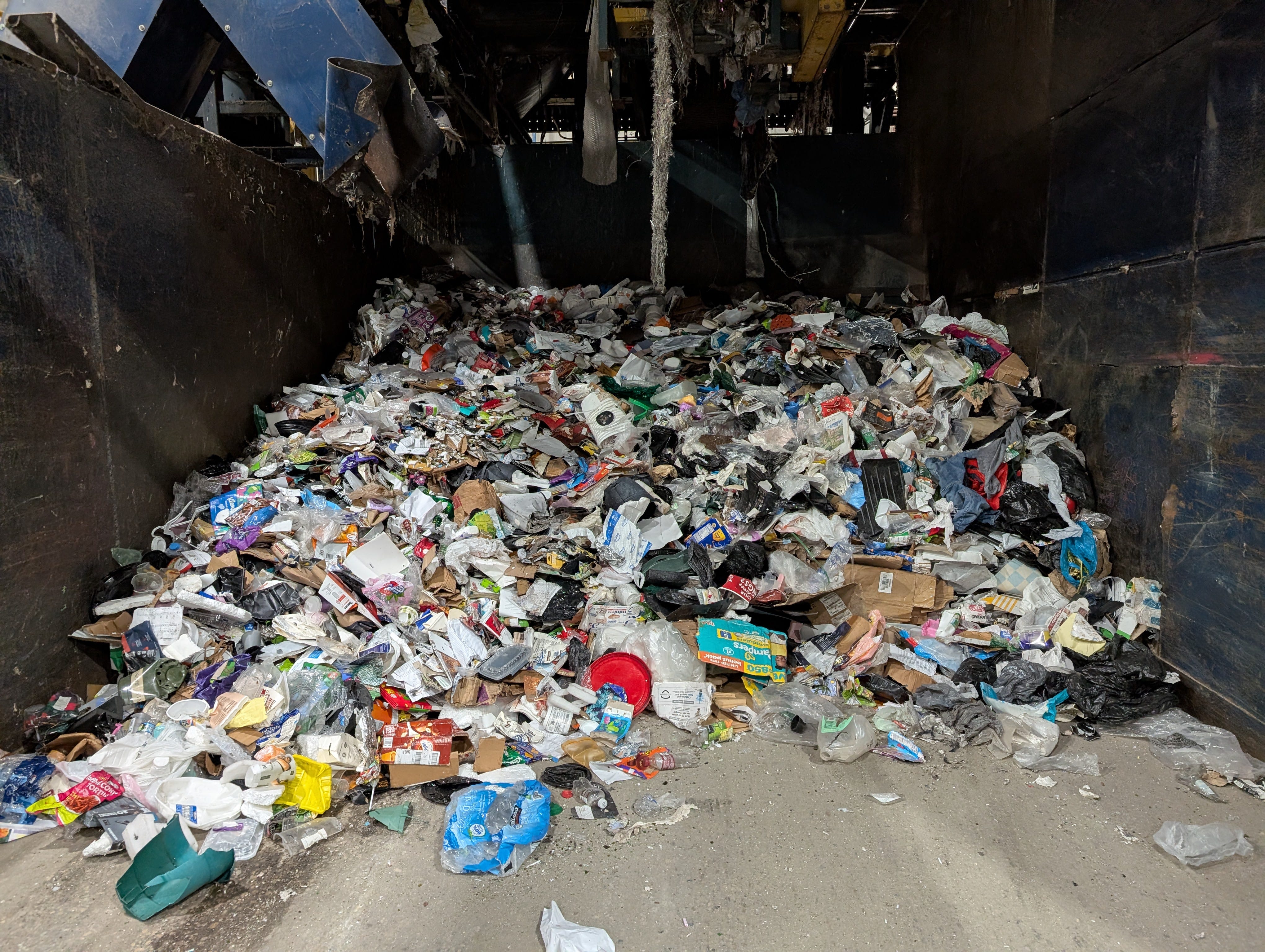
Now, here is the “bad egg” pile (in the photo below), which unfortunately goes to the landfill. Our tour guide said that typically only 20% of materials at this facility are residual (landfilled), which is honestly a MUCH better rate than I would have expected!
Once the bales are finished, industry partners and reclaimers, like mills and factories, buy them to transform them for use in manufacturing new products. If you’ve ever noticed the term “made from post-consumer recycled content” on one of the products you’ve purchased, those materials came from a MRF.
Key Reflections and Takeaways
The first thing to note is that nothing I mentioned in the four steps above involves actual recycling. That’s because a MRF is a sorting center, not a recycling center. The industry partners and reclaimers who buy the finished bales do the work of actually processing the materials, cleaning them and recycling them into pellets or other usable raw materials for manufacturing. It’s a big distinction — and one I didn’t fully internalize before going on my tour.
Another thing that kept nagging at me was that a MRF tour should be required for all companies who produce physical products and packaging. Especially companies whose stuff ends up in the “bad egg” pile. Not necessarily as a chastisement (I’ll be honest, my former employer’s packaging was a glaring culprit 🫣), but to spread awareness and provide motivation to think differently when designing products and packaging. To think about “the end” right from the beginning. Again, in sight, in mind.
I also kept thinking that we have to make all of this easier. And by “this” I mean, clearly communicating what actually belongs in the recycling bin, establishing more take-back programs at retailers for hard-to-recycle items, and obviously, making products and packaging that create a lot less waste in the first place.
It shouldn’t come down to the person working the conveyor belt, because clearly it’s impossible to catch everything in an imperfect system. It should be on all of us collectively to redesign our systems to serve our world’s changing needs.
Actionable Tidbits
I want to end by sharing some other quick hits I learned from my time at the MRF. These should generally all be applicable no matter where you are (in the US), despite there being some inconsistencies across regions.
✅ “Liquid Gone, Cap On!” For bottles and jars, remove liquid and keep the cap on, since anything smaller than a fist runs the risk of falling through their screens.
✅ A little bit of residue is fine. One of the questions I asked was “how clean do jars and cans actually need to be?!” According to our tour guide, a quick rinse is generally all that is needed and that '“you shouldn’t waste 5 gallons of water cleaning a peanut butter jar.” I find it helpful to remember that the MRF is just the sorting stage — all the materials get thoroughly cleaned at the next stage before manufacturing, so it’s not critical to worry about making everything pristine.
✅ Flatten your cardboard and rip off any tape that’s easy to remove. The shipping labels are fine to leave on. If you remember back to the video I shared of the cardboard sorting belt, having the cardboard already flattened helps it fit through the sorters and lets the workers clearly see anomalies that don’t belong.
✅ Don’t pre-crush your cans. The machines are trained to identify cans in their original 3D shape, so it helps them recover the item more effectively. It’s not the end of the world if they are crushed, but it’s not worth going through that effort when the machines prefer them as they are.
✅ Soft plastic is the main source of contamination. Think plastic grocery bags, cling wrap, produce baggies from the grocery store, etc. They clog the machines and go straight to landfill, so they don’t belong in the recycling bin.
✅ Keep your recyclables loose in the bin (never in a bag). For safety reasons, MRF crews will not dig through garbage bags (especially black bags) and are required to dispose of them instead of emptying them out. Remember the Tipping Floor? It is good to keep it loose so everything flows nicely on top of the pile.
✅ Aluminum is really easy to recycle. Glass, not so much. Aluminum is pretty much infinitely recyclable and a very straightforward material to work with. However, something I learned was that there aren’t great systems for glass recycling in the US. This particular MRF (and I assume many other US MRFs) recycles glass by breaking it, which is a little controversial. They also don’t profit from glass or have reliable customers for recycled glass. In contrast, South America has easy systems for returning glass, sanitizing it and making it into a new bottle, which is a much simpler process. Food for thought!
Well there you have it.
If you couldn’t tell, I really enjoyed my tour. 🤓 You might have also figured out by now that I get easily excited about a lot of things related to circularity and reducing waste. But I’m telling you — once you see the glaring need for circularity everywhere, you simply can’t unsee it. And that’s my goal in sharing — to help more people see it too.
Until next time,
Jenny