

006. All's well that rids well
Making Ridwell Mail-In part of my intentional consumer routine

There’s an age-old saying, “all’s well that ends well,” which dates all the way back to Shakespeare. It means that as long as the ending turns out fine, then on the whole, everything is A-OK.
Well unfortunately, if Shakespeare were alive today, he’d notice a whole bunch of things in our lives as modern consumers that don’t “end well” at all.
For instance, take a look at these beautiful seasonal arrangements below — they are all the rage in my neighborhood every December. There are houses nearby with 5 or 6 of these lining their front porch and driveway. They add a gorgeous touch of holiday cheer! I totally get it.

But now let’s fast forward to January, when the seasonal decor comes down. Here’s how these “end”.
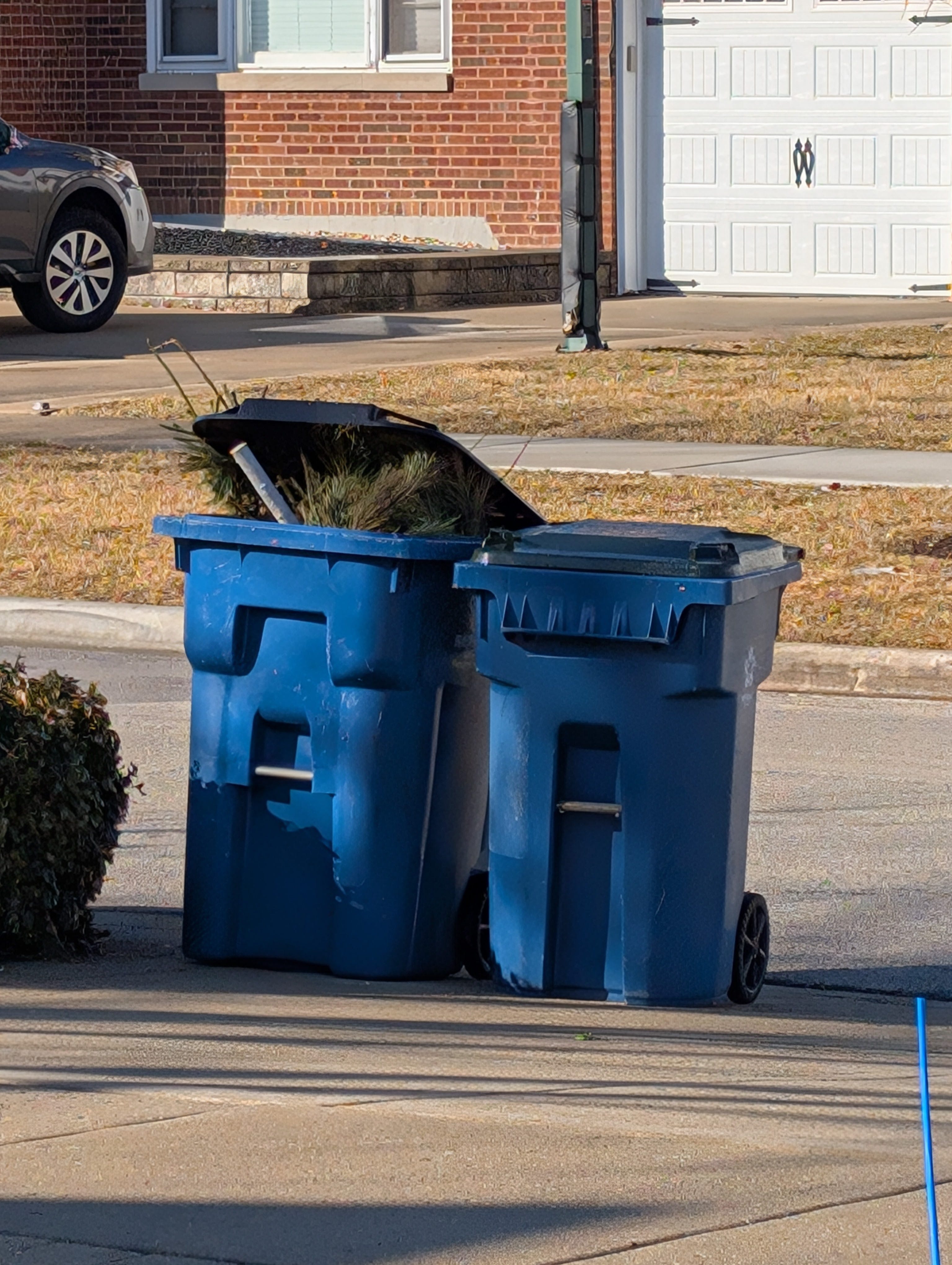
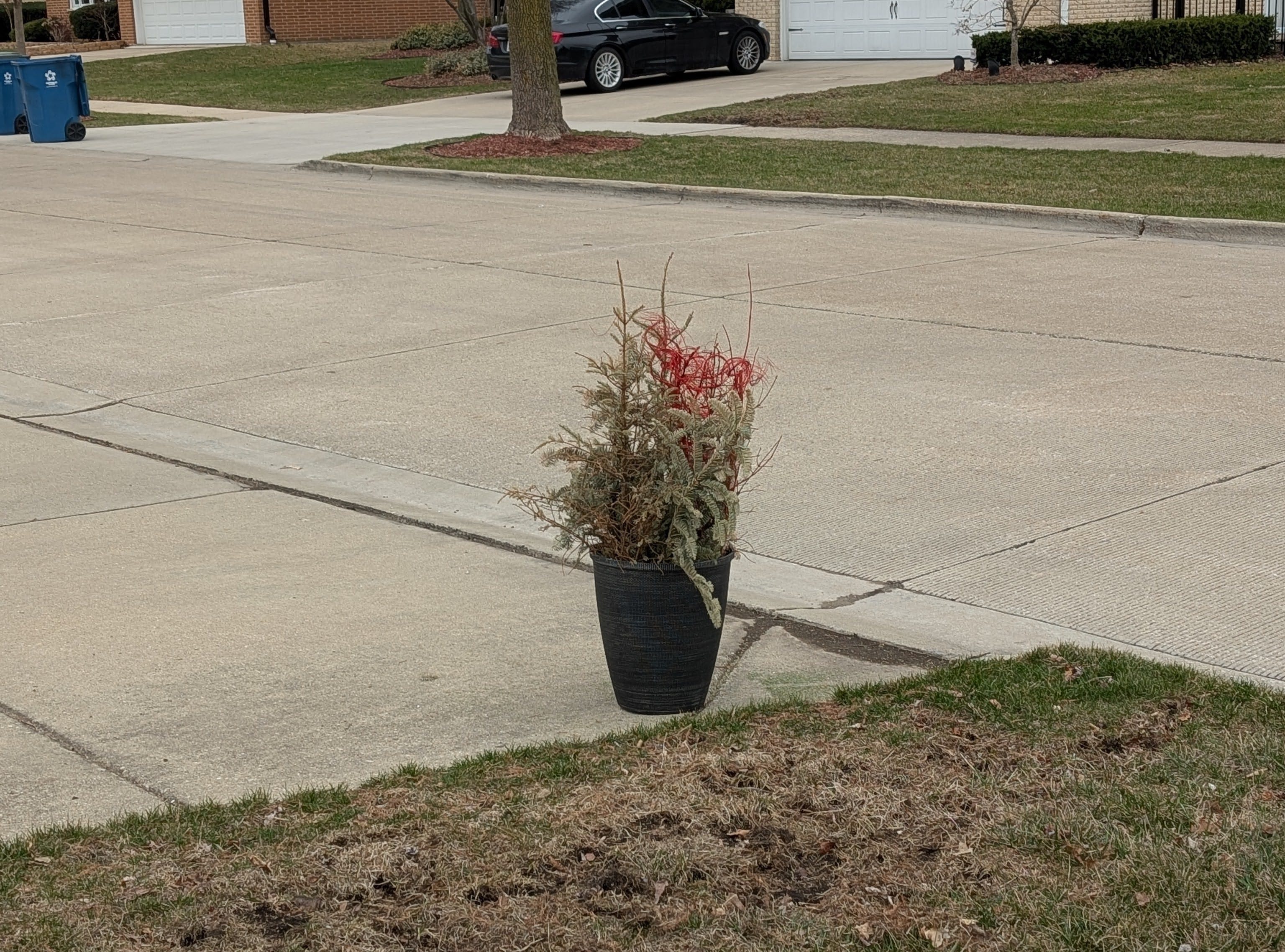
Side note: Yes, I actually took these photos at the end of last season (January 2025) out of curiosity to learn what people do when they’re done with these. The result was exactly as I suspected.
A sustainability-minded person might be tempted to judge the owner: “Ugh, they should have composted those branches!”
But I happen to think that would be missing the *actual* problem: that we don’t design most products with the “end” in mind. We make the consumer do the guesswork to figure out what to do with it.
And let’s be honest. Introducing guesswork or friction of any kind to the average person means it goes straight to the garbage. Not because they’re bad people. But because we haven’t made it easy for them to do the right thing.
This lovely holiday decor was simply made to get thrown away and then replaced next season. Is it any wonder that’s exactly what happened to it?
The sad truth is that the vast majority of products we buy “end” the exact same way: with hard to get rid of as the default setting.
Replace seasonal decor with [fill in the blank] item laying around your house or garage right now, and you’ll see what I mean. Those old shoes with worn out tread, that cardboard-ish box with a clear, hard plastic window that your kid’s toys came in, your stash of old power cords and chargers. We have no idea what to do with them, so we either let them take up space and collect dust, or we put them on the curb to let someone else figure out what to do with them. Am I right?
But now let’s imagine that same holiday decoration was made to “end well” instead. What if it came with simple instructions at purchase so the customer knew which parts were compostable (belongs in yard waste bin or bag) and non-compostable (garbage or recycling bin, depending) and how to easily separate them? Or what if it even provided ways to repurpose the non-compostables into other decor? Or even *came with* a complimentary brown yard waste bag for those who don’t have compost pickup?
Wouldn’t that make you feel even more jolly? 🎅
I am a huge proponent of making it EASY for people to do the right thing at the end of a product’s (or packaging’s) life. And I strongly believe that most people would — if the process was clear, convenient, and simple.
On my journey to become a more intentional consumer, I am always on the lookout for products, services and companies that share that goal. If there is one thing that competes with my passion for reducing waste, it’s customer experience. So I wanted to highlight a company I’ve long admired that does both things exceptionally: Ridwell.
I first learned about Ridwell a few years ago from a coworker on my sustainability team at Amazon (shout out to Cody if he is reading this!). Their flagship program is a porch collection box and biweekly pick up service for hard-to-recycle items that don’t belong in the curbside recycling bin.
If you read my post last week about the Material Recovery Facility (or MRF), you might remember some of these hard-to-recycle items. For example, soft plastic (e.g., stretch wrap, plastic grocery bags, produce baggies, etc.) was one of the main problematic materials that can’t be processed in traditional recycling streams.
Well — as a surprise to no one — there are lots more things that fall outside of the traditional recycling process, from batteries and light bulbs to prescription pill bottles and latex paint.
Ridwell saw this problem and decided to make it easier for people to part with these items in a responsible manner.
For years, Ridwell’s porch collection service has been available only in select cities (and since learning about it, I haven’t lived in one of the cities it serves). But earlier this year, Ridwell rolled out a program called Ridwell Mail-In, which allows anyone in the US to participate via USPS! It’s like music to my Intentionalista ears. 🎵
I was really excited to finally test it out and share my takeaways with you (TL;DR: I’m hooked)!
Trying Ridwell Mail-In
When you start out with Ridwell Mail-In, you receive a starter pack ($30) that includes a Plastic Film bag, a Multi-Layer Plastic bag, two hanging bag clips, and some handy instructions with examples of what goes in which bag.
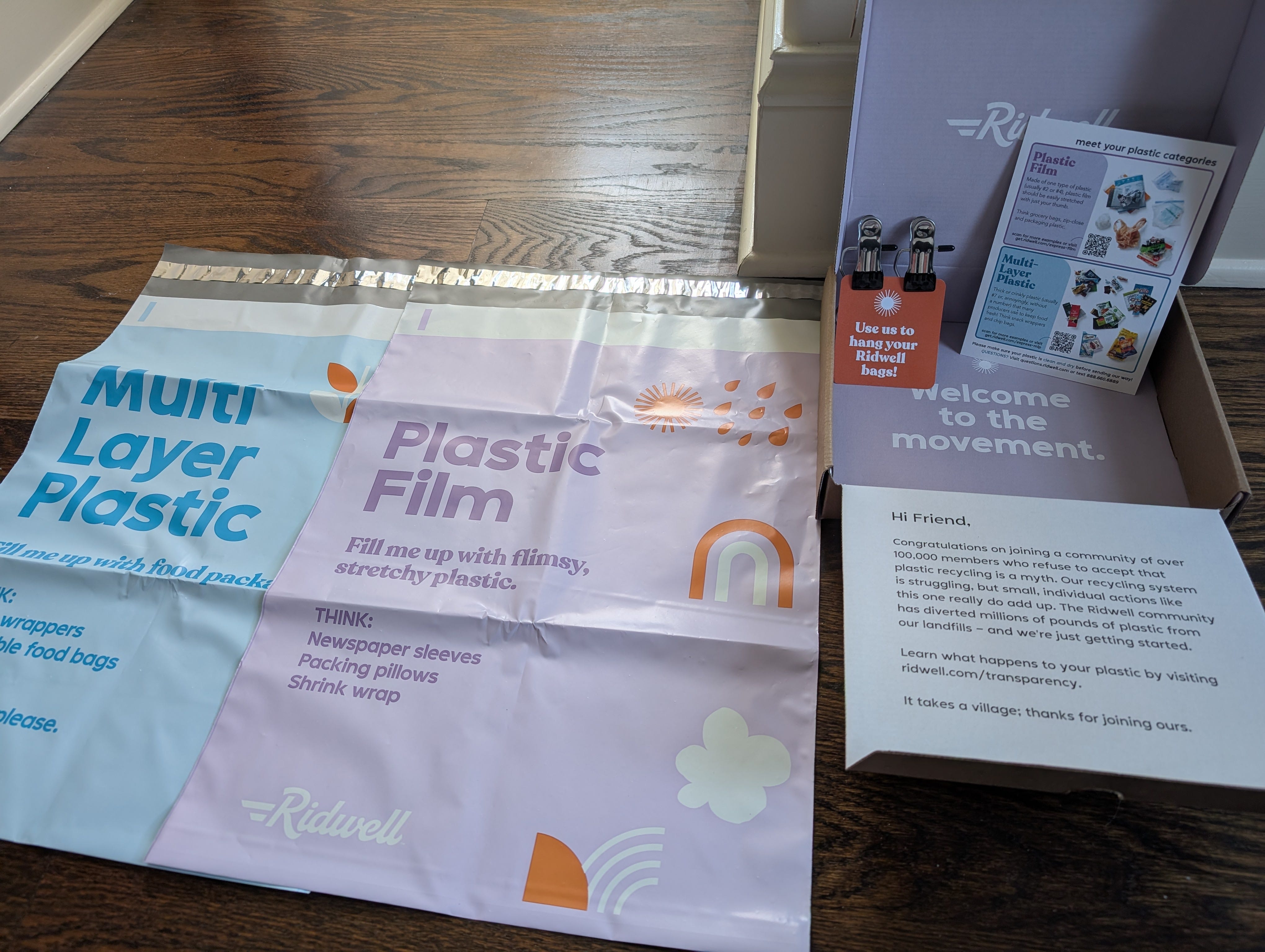
You can hang up your bags in a place that makes sense for you (for me, that is the pantry). And then every time you come across one of the categories of items that go in the bags, just drop it in! It’s really that simple.
A Quick Note: The Ridwell Mail-In starter pack only comes with these two bag types, but you can order additional bags to get rid of things like prescription pill bottles and corks. The flagship porch pick-up version of Ridwell (not the mail-in version, unfortunately) also lets you get rid of things like old clothing, glass, batteries, lightbulbs, kitchenware, paint, and lots of other rotating categories throughout the year.
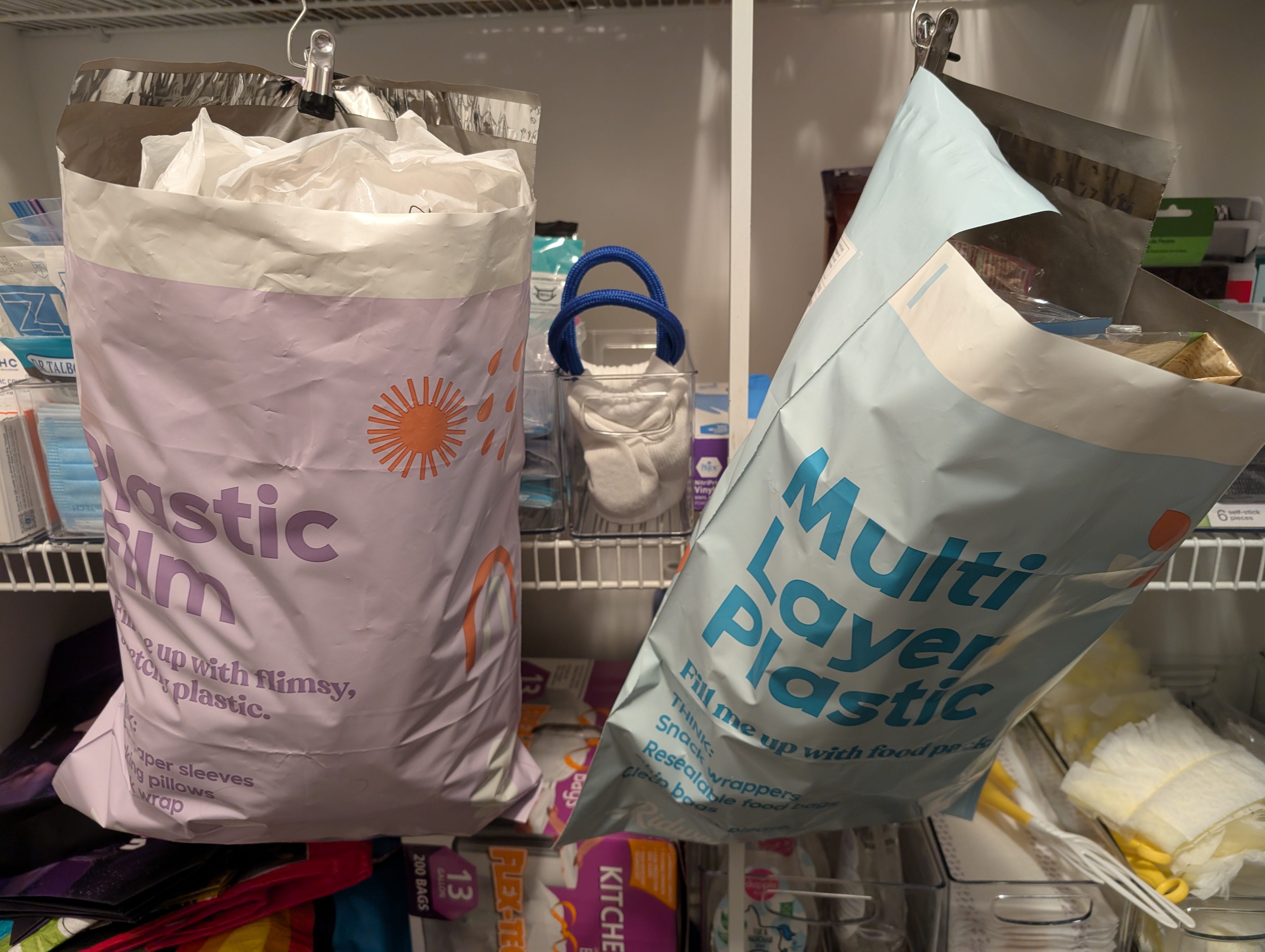
The only “hard” part about it has been retraining my brain that a lot of what I used to throw in the garbage can now get “Ridwelled” instead. Things like snack wrappers, chip bags, Amazon bubble mailers, or that annoying plastic that wraps each individual Kirkland paper towel roll from Costco. 🙄 I still catch myself (or one of my family members) putting stuff in the garbage accidentally, but it has quickly become second nature to fish it right out.
Part of this retraining has also involved facing certain cases where I was not sure which bag stuff belonged in (or if it belonged at all).
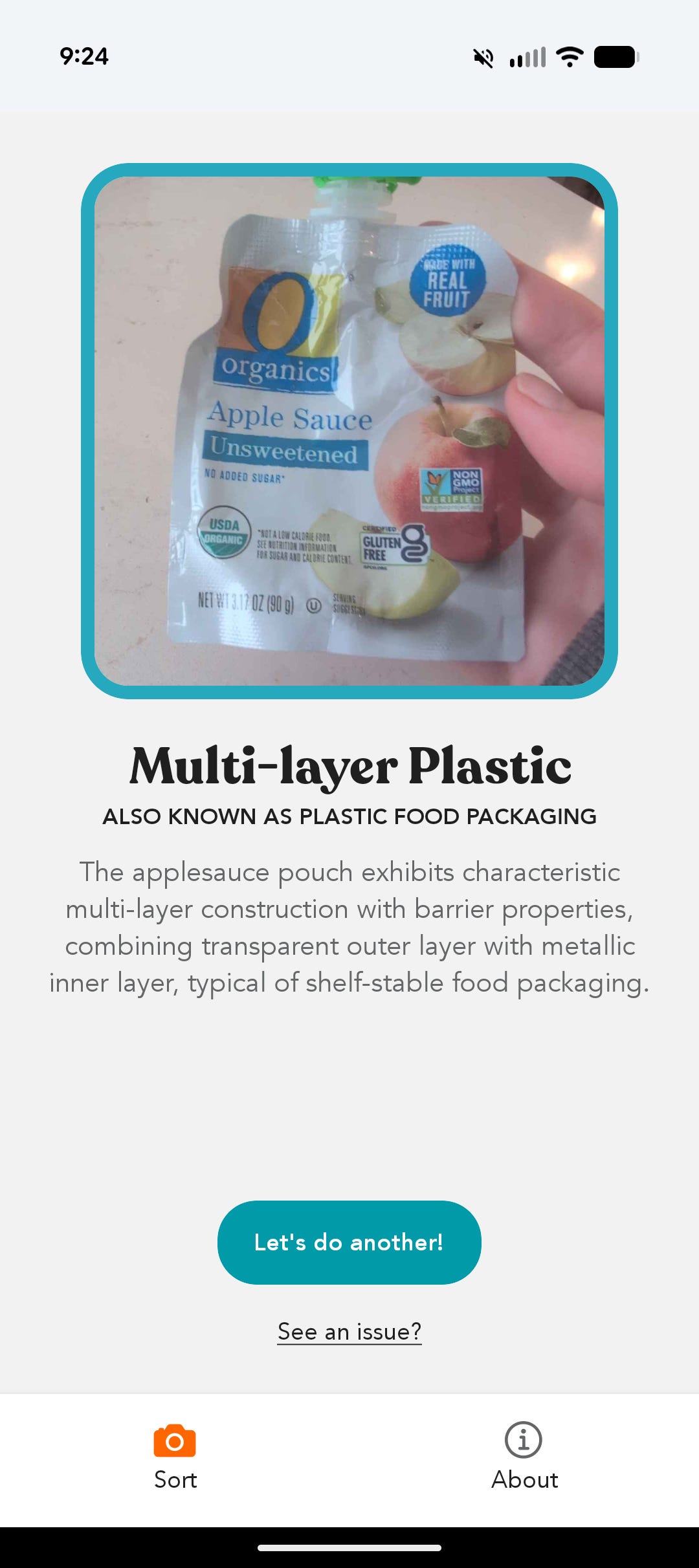
But Ridwell knew to plan for this and created a really cool AI-powered companion app called Sortwell to help you figure it out. You just take a photo in the app of the packaging you aren’t sure about, and it spits out a response about where it belongs in about 10 seconds. It will also say “Not Applicable” if something doesn’t belong in either bag. So. Helpful.
Here’s a quick look so you can see what I mean:
Once you fill your bags, you can arrange a next-day USPS pickup from your porch if you don’t want to drop them off yourself at a Post Office. I do the USPS pickup, and it works like a charm.
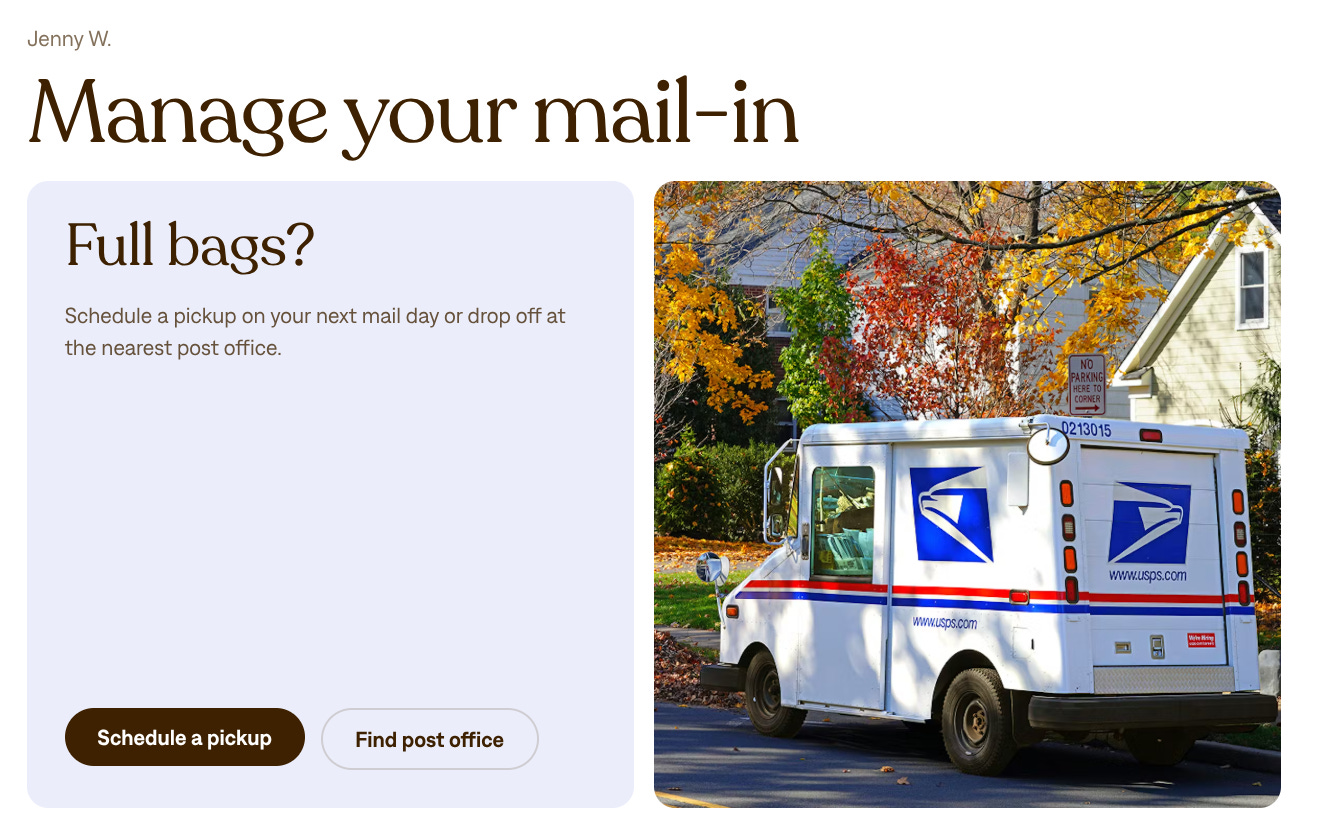
Ridwell texts you to let you know they received your bags, and then your stuff is off to its next life!
What exactly is its next life, you might ask?
The stuff you send into Ridwell is used by industry partners that repurpose them into other useful things. For example, they send all the plastic film they collect to a company called Trex, which transforms it into high-performance, wood-alternative decking.
And the multi-layer plastic? That goes to a company called HydroBlox, which uses it to create commercial and industrial drainage solutions.
Their list of industry partners goes on and on. But one place I know all that plastic doesn’t go is the landfill. Or the ocean. And that makes me feel like I’ve done a really good thing for the earth.
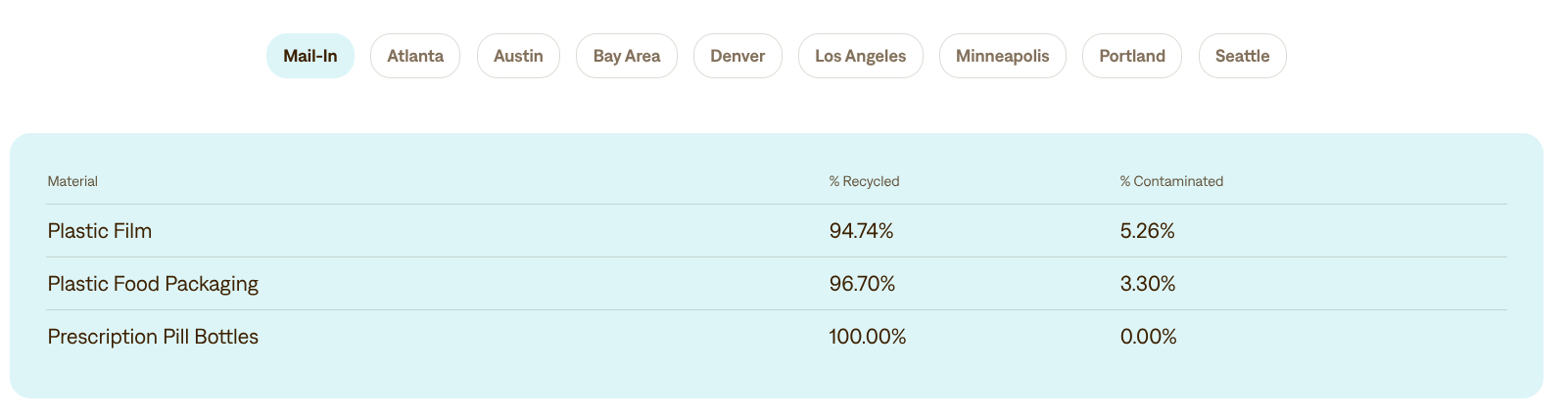
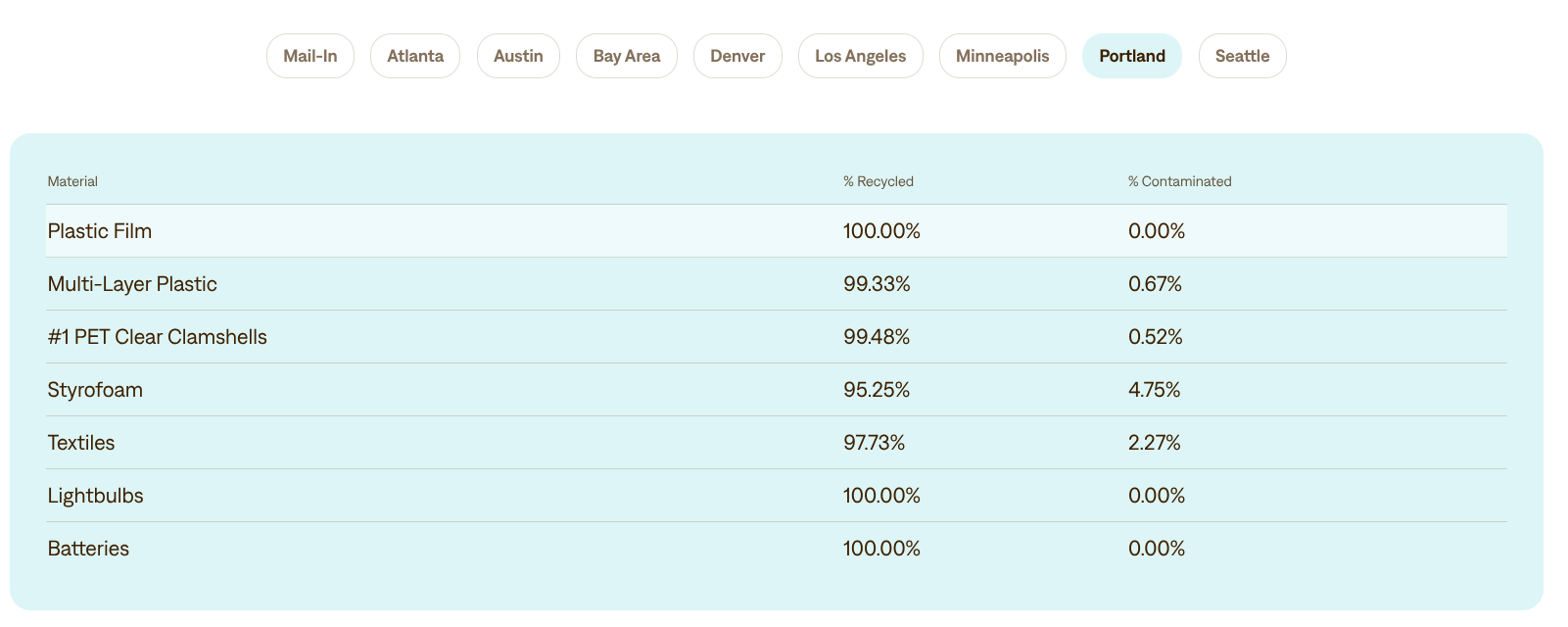
They *even* have a really fun and super transparent dashboard that shows you how much of what you send in actually gets recycled — including breakdowns by city. (How cool is this?! I love a good dashboard.)
I am thrilled to be a part of the Ridwell movement, and I am delighted at how great the customer experience has been.
If you’re interested in testing out Ridwell Mail-In (or if you are lucky enough to live in one of the major cities where they operate their flagship porch collection program), check out their website and give it a try! I have three 50% off promo codes for Mail-In starter kits that I can share as well - just drop me a message if you’d like one of them. 😃
To make sure “all’s well that ends well” with this post, I want to leave you with a summary of what I believe makes the “end” actually go well for products and packaging.
✅ Make it clear. Provide simple, fool-proof instructions about what to do at the end of the product or packaging’s life. Don’t make the customer guess how to interpret things like plastic type or assume they know which bin to put it in if you don’t tell them explicitly (spoiler: they don’t).
✅ Make it easy. If the instructions require disassembly, then make disassembly a breeze. If the instructions require mailing something in, make it seamless to arrange a direct pick up. Minimize friction wherever possible throughout the customer’s journey, or it won’t get done right (or done at all).
✅ Make it transparent. If your packaging or product is being repurposed after it’s collected, shout it from the rooftops! Let customers see their impact and feel like they play an important role on the journey. People are more likely to be good stewards if they know there is actually a rewarding next step.
What is something in your house that you’ve had a hard time getting rid of lately? Tell me about it in the comments!
Until next time,
Jenny