

008. Ending the year on a "Calmer" note
Sharing lessons learned from meditating more consistently in 2025.

I have been using the Calm app since 2020.
When a lot of people started baking sourdough bread during COVID lock down, I started learning how to meditate.
In preparation for giving birth to my first baby, I even did a “21 days of Calm” series where I meditated every day for three weeks straight before she arrived.
You might think that’s impressive. But truthfully, that hasn’t been the norm.
For the last 5 years, I’ve mostly gone through waves of sticking with meditation for 2-3 times a week, and dry spells where I might miss a whole month or two.
Ever since I started using Calm, I’ve considered it to be a tool I could reach for if I was in the mood for it, but it wasn’t something I baked into my days in any sort of structured way.
I would try to get to it when I could — but that meant a lot of times I didn’t get to it at all.
When I stepped away from my corporate job earlier this year, one of my personal goals was to change that.
I wanted to focus more on embedding meditation into my life, since I knew it had always been a powerful, positive force whenever I had taken the time to prioritize it. It noticeably improves my focus, my general outlook, and my patience during stressful moments.
I also wanted to be intentional about how I was spending my time. Not just letting days pass me by, but actually creating systems that put me back in the driver’s seat of my own destiny.
Calm seemed like low-hanging fruit I could optimize on the path to achieving both of those things.
How 2025 Started…
To be clear, I started off this year using Calm much like I had in prior years.
Here’s a picture of my meditation history from January 2025 for reference:
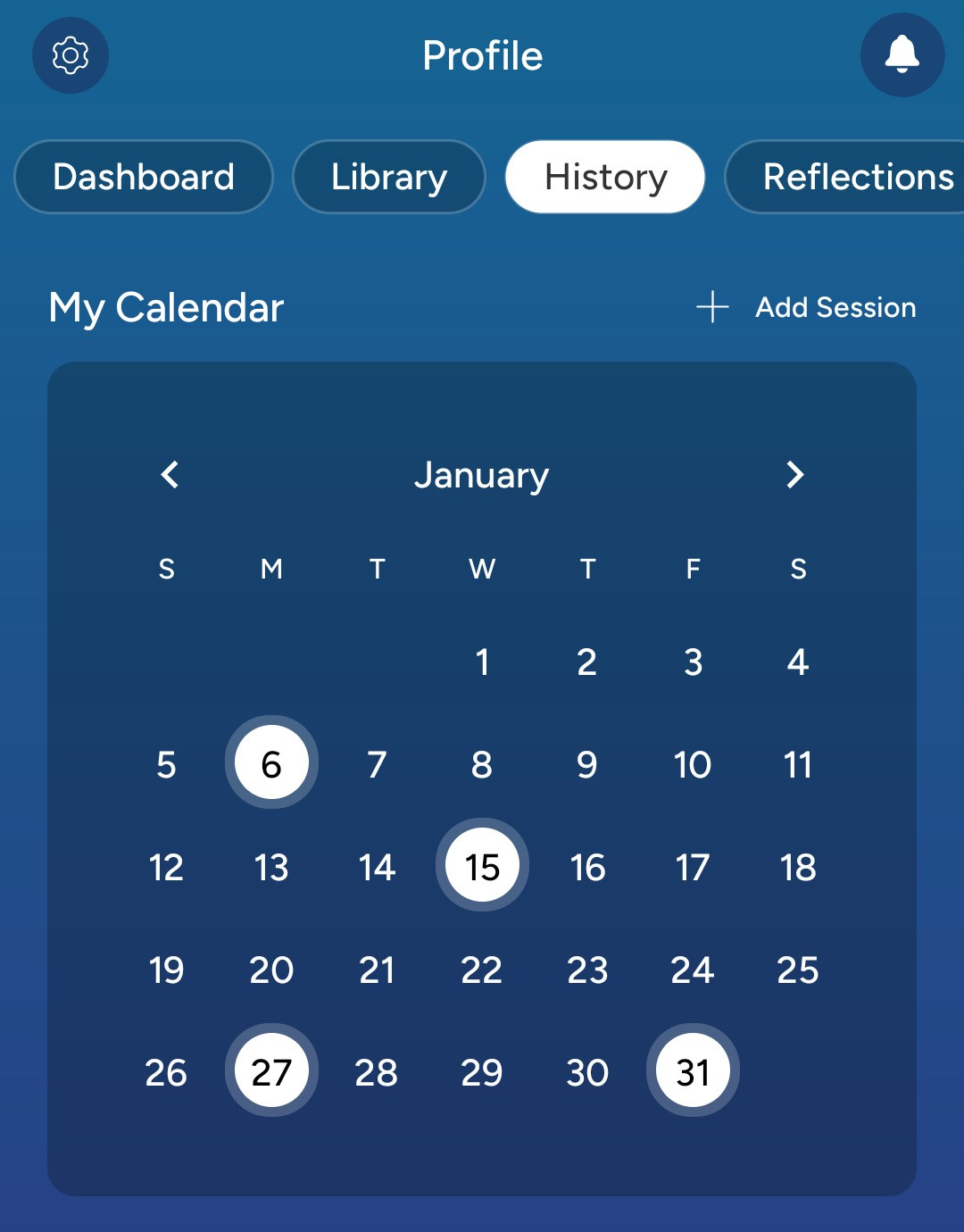
But throughout this year, I have tried a few different systems to increase my consistency and actually embed it into my daily life.
The following section is a breakdown of those different systems and what I learned from each.
Note: All meditations I refer to below are typically anywhere between 7-12 minutes long, if you are new to Calm or meditating in general.
📋 System 1: The To-Do List
The first system I tried was adding Calm to my daily to-do list. I am a big to-do list person, so this is usually how I’m most comfortable keeping track of things I want to accomplish.
How long I tried this system: February - May
Meditation time of day: Varied (morning, midday, before bed — whenever I could fit it into my schedule on a given day)
Meditation location: Varied (couch, bedroom, comfy chair)
Meditations I listened to: During this time period, I usually defaulted to listening to a meditation called The Daily Calm, which is a slow-paced, traditional meditation that includes a “body scan” and lots of built-in silence.
Average weekly meditations using this approach: ~2.5
Analysis:
Since to-do lists are already part of my day, I was generally pretty good about remembering to add it. But there were some days I would flat-out forget, or some days where life just got in the way, as it often does as a mom of two young kids.
Having it on a to-do list meant I was giving myself leeway to get to it whenever I had time during the day, rather than during a set time, which meant it was always something I had to fit in, instead of something I could reliably predict.
It was something I knew I should do (kind of like flossing), but it often fell off the list if something more urgent or “important” came up.
Slow-paced meditation made me relax, but I often felt my brain wander too much during the periods of silence.
It was better than no system at all, but it was clear that it wasn’t effective.
🌙 System 2: The Nightly Wind-Down
Next, I tried doing it at a consistent time and consistent location, as well as mixing in some different types of meditations. (Side note: I know you’re only supposed to change one variable in an experiment, but this is how I roll).
How long I tried this system: May - September
Meditation time of day: At night, right before going to sleep
Meditation location: Laying in bed
Meditations I listened to: A mix of the Daily Calm, The Daily Trip and the Daily Jay. The Daily Trip is a little more “active” feeling, and doesn’t typically include things like a body scan but is still fairly low-key. The Daily Jay (led by famous author and former monk Jay Shetty) is the most “active”, meaning almost the entire session usually takes the form of a story or lesson.
Average weekly meditations using this approach: 3
Analysis:
It was, quite literally, a calming way to end the day and clear my cluttered mind before sleep.
However, there ended up being quite a few nights where I was so tired that I’d actually fall asleep while listening to it. I realized this meant I wasn’t actually absorbing most of the content.
I liked trying a mix of different meditation styles and found myself choosing different ones based on my mood or alertness level.
I learned that I really loved The Daily Jay’s style and content the most, but I struggled with it at night, since it requires more active mental participation. Because of this, I usually reverted back to the lower-key meditations.
As tough as it was sometimes to stay awake, I did think having a consistent time and location was helpful, as I found that the action of getting into bed and winding down was a natural cue for the habit.
☀️ System 3: Post-Morning Drop off
At the end of Q3, I decided to shake things up again. I realized night time was not really serving me anymore, since I noticed my dedication was starting to wane. However, I wanted to continue to capitalize on having a consistent location and time of day, since I thought that part had worked well.
How long I tried this system: September - present
Meditation time of day: Morning, right after my husband leaves with the kids for school drop off.
Meditation location: Comfy chair in my bedroom
Meditations I listened to: Almost exclusively The Daily Jay
Average weekly meditations using this approach: 4-5
Analysis:
An empty house after school drop off has been a pretty reliable trigger. It’s a time when I am awake and alert and in a mindset to start my day on a good note.
This time of day allows meditation to be the first thing I do before I start any other concrete tasks. In fact, I create the day’s to-do list after I’ve finished my Calm session, so I don’t get distracted beforehand.
I absolutely love The Daily Jay and find myself thinking a lot about the stories and lessons well into my day. It’s upbeat and feels less like I am actually “meditating” — just learning how to be more mindful instead.
I think the combination of doing it in the morning and shifting away from the more silence-based, traditional meditations has been the biggest unlock for me.
After just a couple weeks of trying it this way, I noticed my consistency tick up naturally. I started to really look forward to it as a part of my routine, rather than something to check off my daily list.
Pretty quickly (mid-October), I decided to add a journaling component to the end of each session. I was getting so much value out of the stories and mindfulness tips that I wanted a better way to remember them and reference them later.
I typically just jot down a few thoughts about how the story applies in my own life, what inspiration it gives me, or follow any other prompts from the meditation itself.
Since I’ve done that, I’ve seen a TON of benefit in my own life, ranging from increased desire to meditate regularly to a tangible uptick in my patience levels and inner peace during my kids’ tantrums (if you know, you know).
It’s been a worthy investment of my time, and I would recommend meditation (and specifically The Daily Jay) to anyone looking to be more intentional in 2026.
In summary, here’s what has helped me integrate meditation and mindfulness into my daily life this year:
✅ I meditate at the same time every weekday morning. I currently don’t meditate on weekends because my life is more hectic with kids around, but I’ll keep experimenting with that.
✅ I meditate in the same location every day to minimize distractions and mentally arrive in the space more seamlessly.
✅ I use a meditation format that gives me energy and inspiration and aligns with my style and goals, rather than relying on the default, traditional format.
✅ I write a handwritten journal entry following each meditation, which helps me absorb what I just heard and tie it back to my own life.
✅ I wait until after I’ve done my meditation before writing out my daily to-do list, to minimize the temptation to get started on other shiny, “urgent” things first.
I would encourage you to test your own methods to find what you like the most, since there are many different types of schedules, meditation preferences and locations that could work better for your needs than the ones I’ve shared above!
How 2025 Ended…
Now here is my December 2025 calendar, after having the right system in place for a while. Pretty different, right?
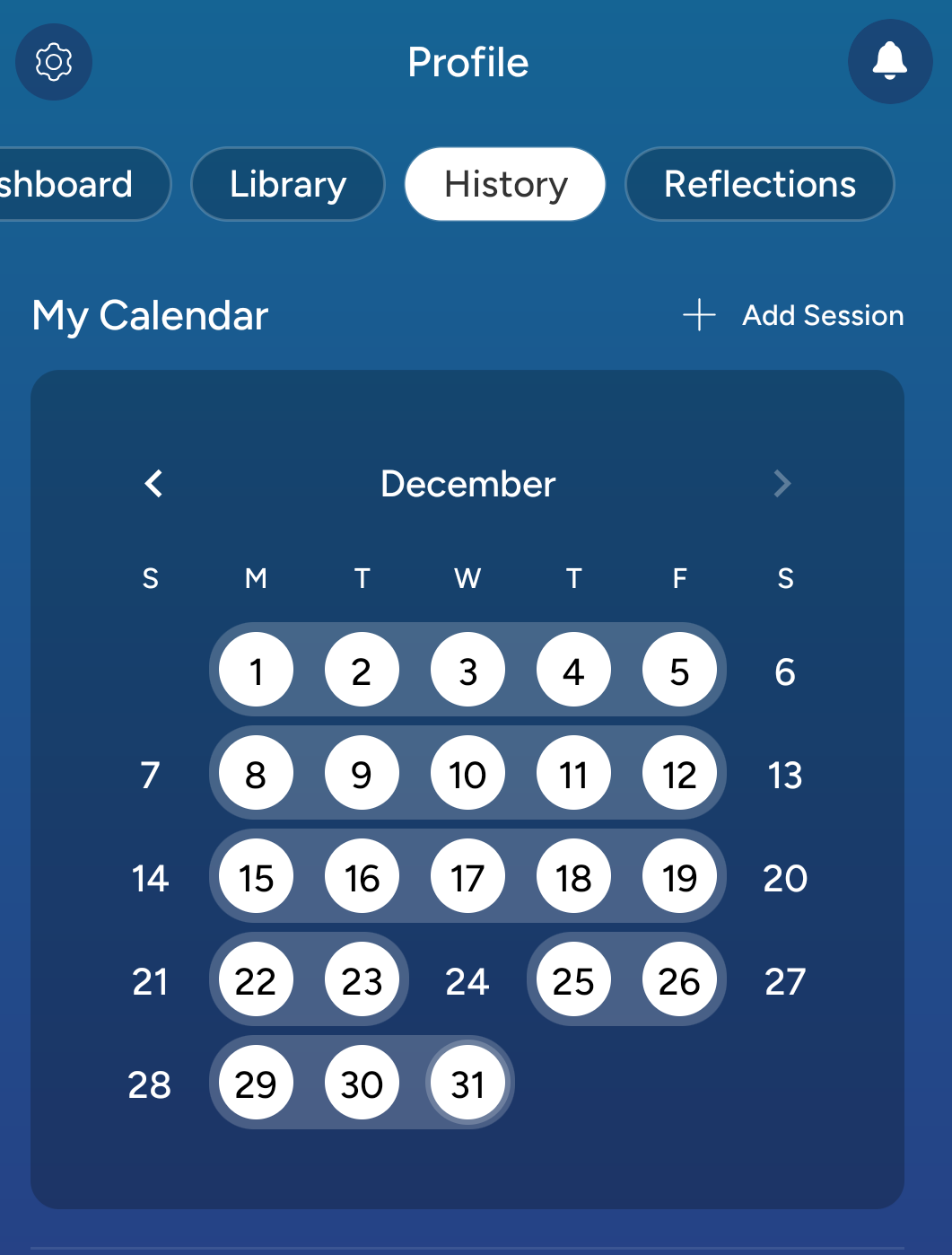
While I’m thrilled with the results, I will confess that I was pretty frustrated to miss a day.
Especially because I knew this was something I wanted to write about in this blog! 😂
I was *really* tempted to start fresh again in January so I could share a completely filled-in weekday calendar instead of one with a gaping hole in the middle.
But as I thought about it more, I realized that sharing the gaping hole is exactly what this blog is all about: Progress over perfection. Personal growth. Experimentation. Grace.
I’m not here to claim guru status; I’m here to be authentic.
I’m here to be vulnerable about my own intentional living journey (and missteps) so more people feel empowered and comfortable starting their own.
The day I missed — Christmas Eve — was the first non-school day for my kids in a while, and there was a LOT going on that day. I was hosting guests for dinner, cleaning my house, looking after two small children who were bursting with excitement and bouncing off the walls, baking batches of two different types of cookies, and generally creating childhood magic.
Remember my system? My trigger is an empty house post-school drop off.
Well, that didn’t happen that morning.
It threw me off, and I got caught up in the busy-ness of the day. While I was conscious that I had skipped my meditation, I kept reminding myself at least not to forget before going to bed.
When I finally finished preparing the scene for a memorable Christmas morning and started getting ready for bed, it was nearing 12:30 am.
It was already tomorrow. I had broken the chain.
I felt defeated — and really tired.
I’m sure there are lots of lessons in this story about creating backup systems that trigger when your usual trigger doesn’t exist — and I’ll figure those out — but my main takeaway is that I’m still a work in progress, and that is totally fine. Making magic was more important to me that day.
I’m also REALLY proud of how far I’ve come.
I made a concerted effort to improve — and I did.
I think my genuine frustration over missing a day shows how integrated it has actually become in my day-to-day life.
It was a noticeable miss. And that means something is working. ✨
This morning’s Daily Jay was fittingly titled “Small Wins”. I’ll end by sharing a little snippet that I loved, which I hope will resonate with you too.
“When you set day-to-day goals that are realistic and achievable, you build up your confidence and make specific strides toward your dreams. When we adopt the habit of celebrating small wins, we actually get big rewards in terms of motivation and self-belief. It boosts our confidence that we can do more, because look what we’ve already done.
In the words of G. Richard Shell, a professor at Wharton Business School, ‘Don’t write a book, write a page. Don’t climb a mountain, take a step on the path that leads to the summit. Don’t hit a home run, make contact with the ball. Find a way to prepare for a big challenge by succeeding at something small that gets the ball rolling.’
There are no singular acts of accomplishment. Only a series of simple steps linked together by persistence, dedication and resilience.”
A quick note on what to expect from this blog in 2026:
As we begin the new year, I will be mixing in more intentional human content like this, in addition to my intentional consumer content of late.
I purposefully named this blog The Intentionalista to cover a range of topics under the “intentional living” umbrella (read my first blog post about that here).
So while you can expect to see *a lot* more posts sharing actionable, informative and inspirational nuggets of wisdom about the circular economy, you’ll also see more posts about being intentional in one’s life and career, setting personal goals, and creating systems to achieve them. All through the lens of my own transparent, down-to-earth (and hopefully entertaining) learning journey on the path to personal growth in both of these areas.
You can think of it as reducing “waste”, holistically: reducing physical waste by being more intentional about how we consume (and how we design things better from the start), and reducing time waste by being more intentional about how we live and work.
I’m so excited to have you along for the ride. Let me know what you think in the comments!
Cheers to this year’s progress, and next year’s possibilities.
Jenny