

018. A toddler birthday party as a microcosm of a linear world
Why circularity requires systems, not just one mom's good intentions.

Kids’ birthday parties are one of the most treasured staples of childhood.
The themed decorations, the plastic table cloths, the pizza and cake galore — and the real stars of the show: the goodie bags.
Sound familiar? That’s because they haven’t changed a bit since I was a kid.
And by that I mean: they are still single-use-a-paloozas.
When I planned my daughter’s latest birthday party, I was determined that this time would be different.
I am an Intentionalista, for goodness sake. If I can’t figure this out, who can?!
But, I’ll be painfully honest: I still struggled. A lot.
In fact, almost every parent does, at least in one way or another. And it’s not because we don’t have good intentions to reduce waste (I actually think many of us do). It’s because, without the right systems and incentives, it’s much harder to match intention with action.
Let me explain what I mean.
The Systems (or Lack Thereof)
Like it or not, we live in a linear world.
(Hope you read that to the tune of Madonna’s “Material Girl”, because I sure did).
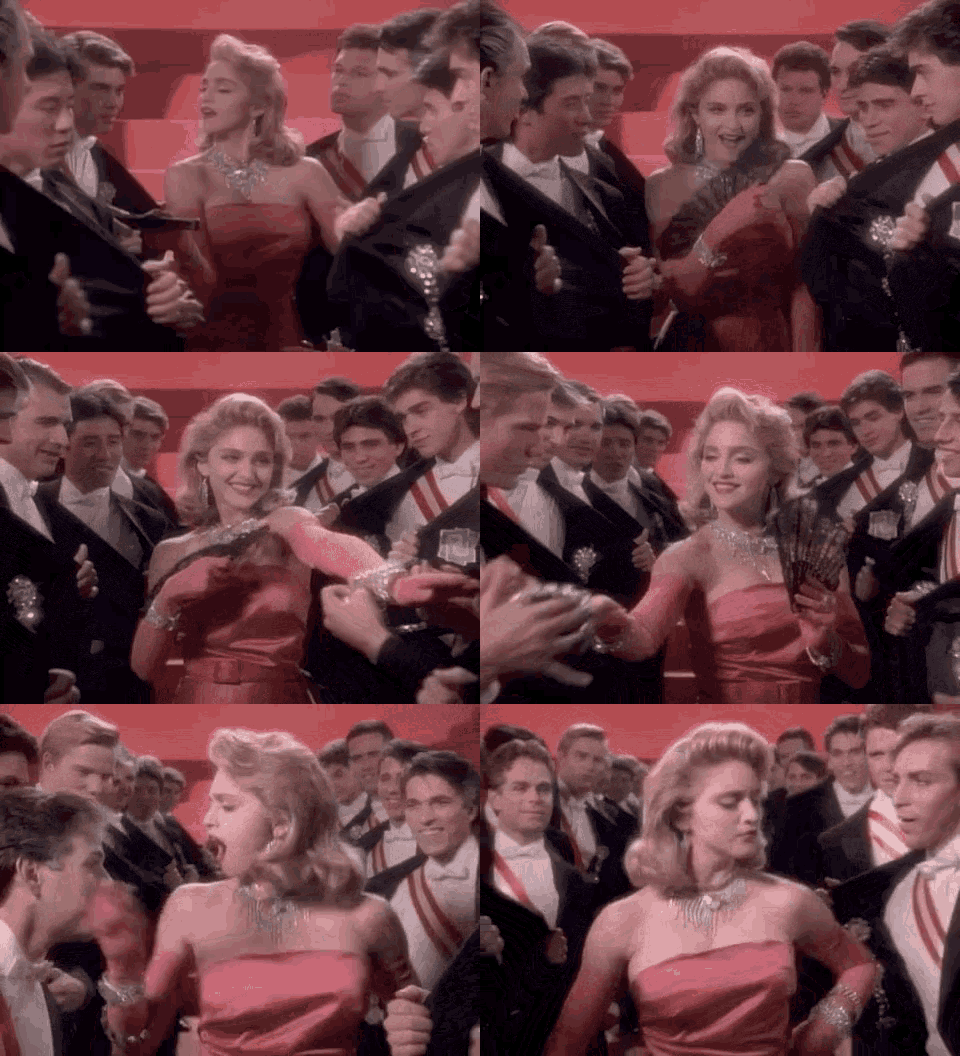
We extract the planet’s resources to make products (like plastic tablecloths and cheap goodie bag toys).
We often use those products once (in the case of a kids’ birthday party, we use them for only about 2 hours).
Then we throw them away (and the resources are lost forever).
But let’s say you want to do better than that. Let’s say you want to use compostable plates and cutlery because you know they’re better for the planet.
That’s great. Now where’s the compost bin at the party venue you rented? Oh, right. There isn’t one. So might as well not spend more on compostable plates that will end up in the trash instead of the compost.
How about reusable plates? Love the concept, of course. But is it ever realistic to take home a dirty pile from a party and stuff them in my already-packed car?
Ok, and how about decorations? My daughter wanted a parrot themed party. Where on earth am I going to find parrot-themed decor that isn’t single use? It would take a lot of effort for me to drive around to lots of thrift stores or pore over lots of different peer-to-peer selling sites to (maybe) find two or three things that would slightly count as parrot decor. So I give up and look on Amazon or Target.
See where this is going?
It’s actually quite difficult. And that’s coming from someone who already goes out of their way to be better.
Sure, you might say, “then don’t have a party!” or “just have a party at home!” — but in my opinion, both of those options come with their own distinct challenges.
No well functioning system = no easy solution.
The Incentives
Trying to execute a perfectly sustainable party feels like someone giving advice like “you should use your car less to get around” when there are very few safe bike lanes, limited public transportation options, free highways everywhere and easy parking at the destination.
You might have intentions, even a strong desire, to use the car less, but when the incentives all point toward continued usage, that’s ultimately what you end up doing.
In fact, renowned investor Charlie Munger famously said, “Show me the incentive and I'll show you the outcome.”
Incentives for parents throwing kids’ parties today include:
Following the path of least friction
When single-use items make party cleanup a breeze and a pre-packaged bundle of goodie bag stuffers saves parents time and energy, it’s easy to see why they win out over extra chores and errands.
Meeting cultural expectations
Providing goodie bags (or party favors) as the host is one of the most time-honored traditions — ask any toddler, and they’ll tell you it’s their favorite part of a party. Skip it and risk facing sad stares from three year olds and judging glances from Susan from PTA. (In other words, you can’t).
Mitigating risk
When returns are pretty friction-less, it’s easy to understand why we all overbuy items we may not even need “just to be safe”. Similarly, when we don’t want to run the risk of anyone going hungry at our party, we over-order pizzas and snacks (and then end up wasting a ton of leftovers).
Getting social validation
The desire to share photos and get tons of likes on social media can sometimes drive parents to go a little overboard with decor (though let’s be honest, it’s just the modern version of “keeping up with the Joneses” that has always existed). It’s also the same incentive that drives us to seek out a fresh new theme each year instead of reusing things more than once.
Buying inexpensive over lasting
If you know you’ll only use things like plates, cups and decor once, you are not exactly incentivized to make sure they’ll last. The dollar store and a random seller called XYBSKG on Amazon look pretty good when you need something for 2 hours max and can easily throw it all away when you’re done.
Being more intentional in a linear system
In short, there are real, systemic gaps and incentives that make it really easy to understand why a kids’ party in 2026 doesn’t look all that different from a kids’ party in 1996.
When the systems don’t change, the results don’t either.
And changing the status quo is an especially tall order when you’re up against two of the things consumers (and parents) care about the most: low price points and ease + convenience.
But despite all the headwinds, I’m proud to share that I made a lot more intentional choices this year to reduce waste — and the good news is, they’re all easy to replicate!
🎁 Gifts
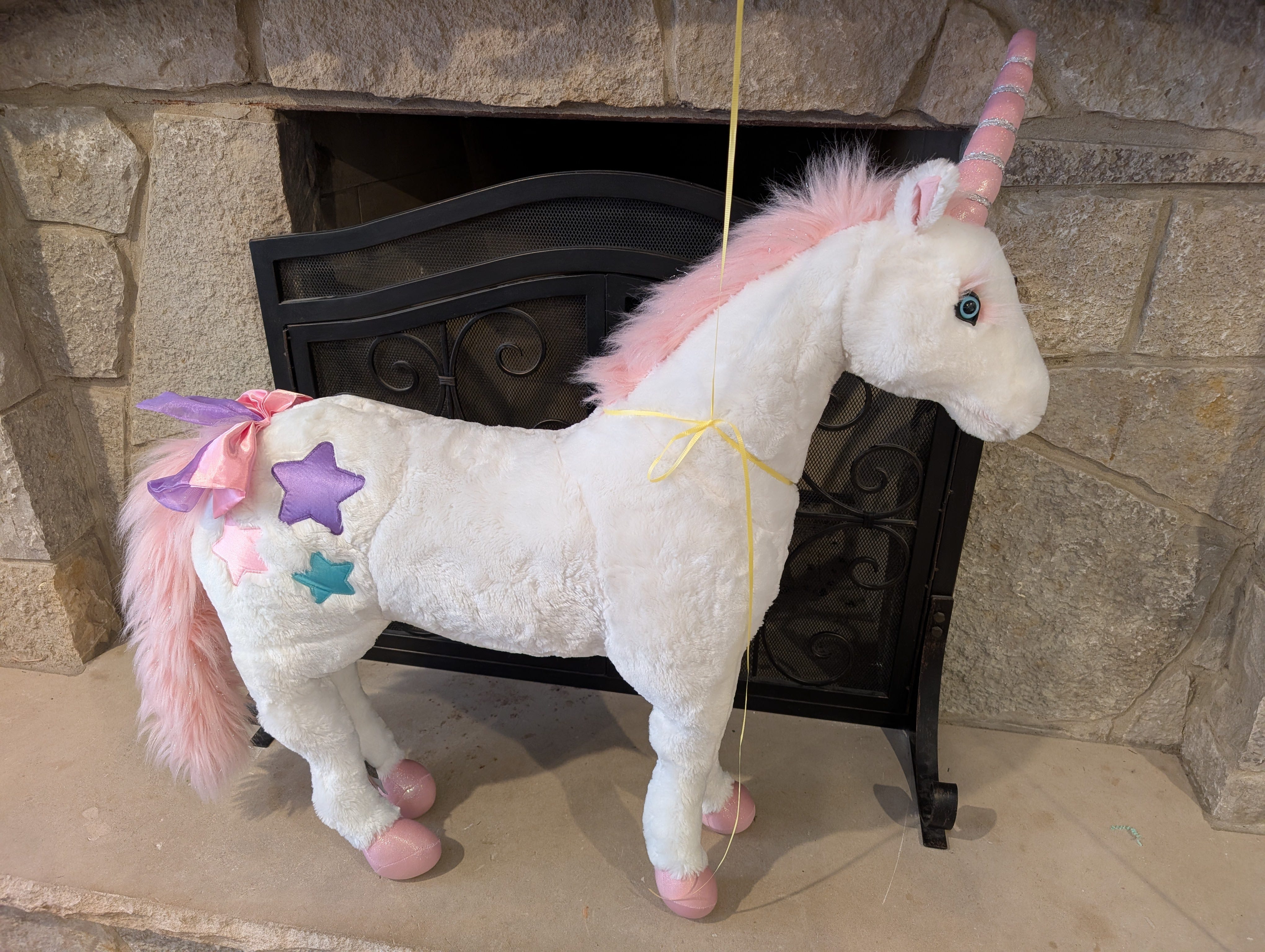
Three out of five gifts we gave our daughter this year were secondhand, either from Rhea Lana’s consignment sale or Amazon Resale (all in like-new or gently used condition but at steep discounts).
🥳 Party Favors
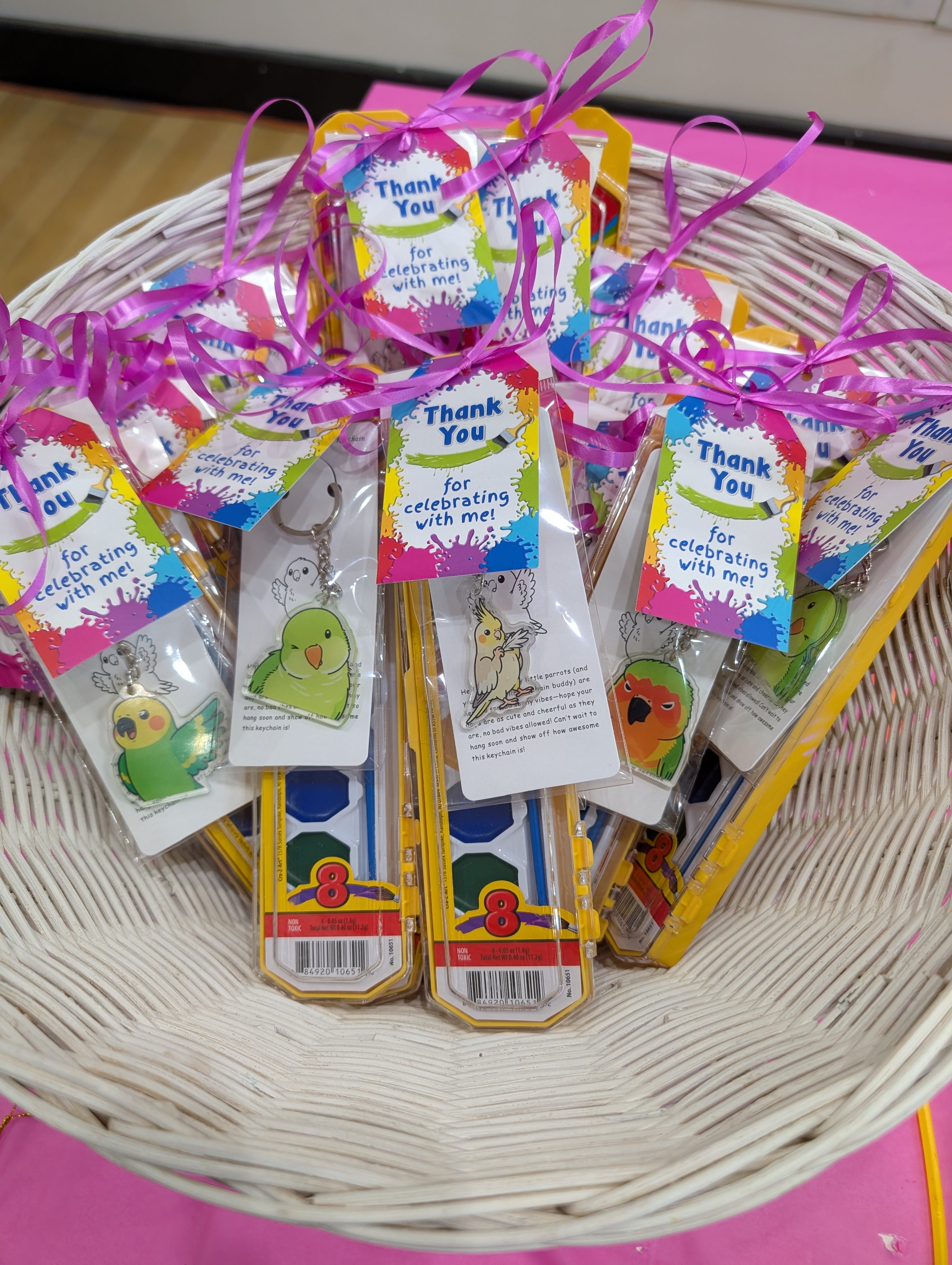
I swapped out the traditional goodie bag for a more practical gift with no baggie at all (a watercolor set and a little parrot keychain). It’s definitely an example of progress over perfection, but I got multiple comments from parents on its usefulness and simplicity.
🎉 Decor
I reused one decoration from two years ago that I had saved (they were big leaves from her jungle birthday — goes perfectly with parrots!). I also went fairly minimal on the party decor at the venue (a paint-your-own art place which was already quite colorful).
🛍️ Wrapping
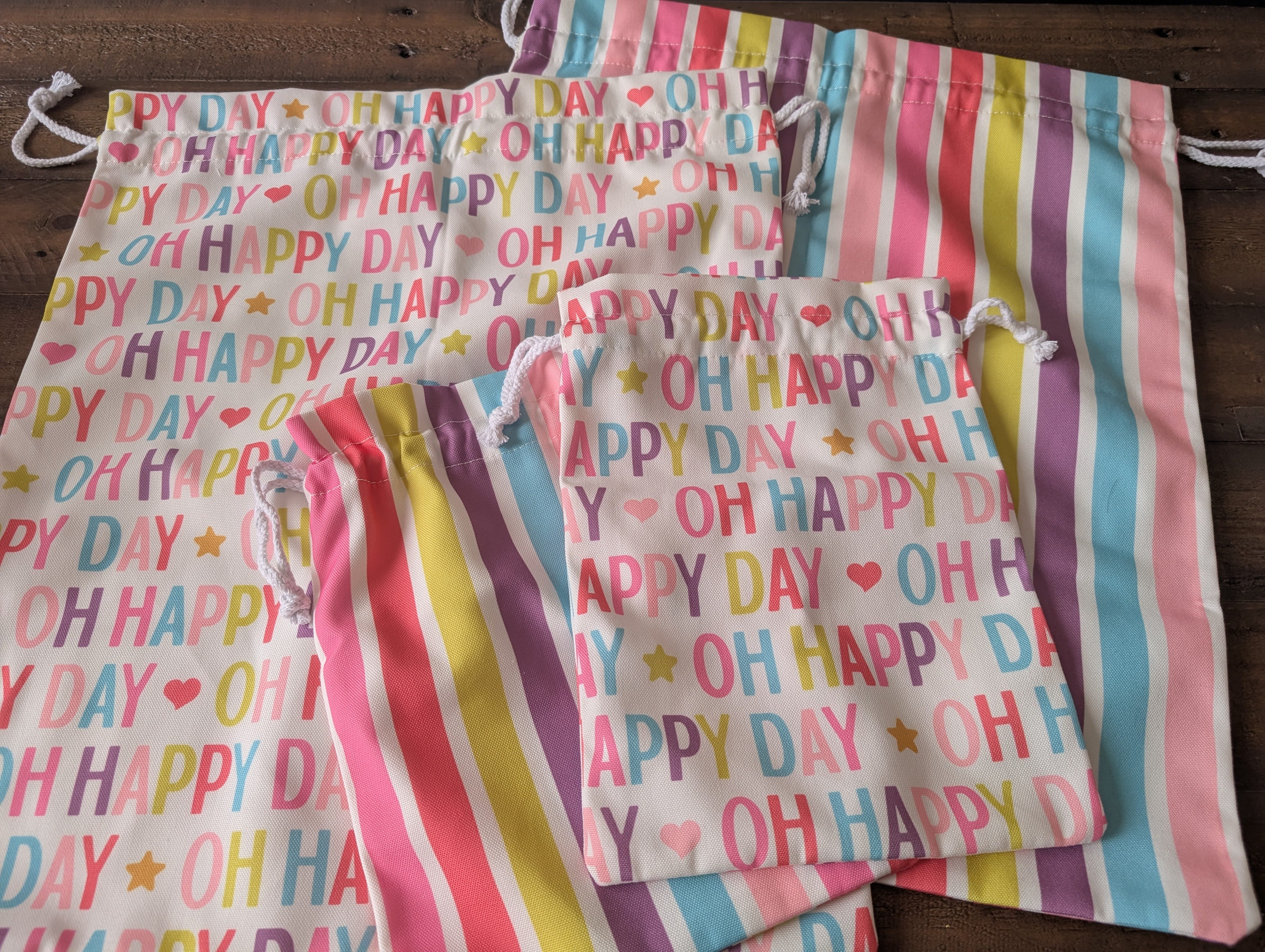
I used this cute reusable drawstring pouch “wrapping” for all of her birthday gifts (I picked a simple pattern that will grow with her over the years).
Shortcomings
And in the spirit of full transparency, here are some *less than perfect* things I did (gasp!):
I used a single-use table cloth
I used disposable paper plates and plastic forks
I still bought two new things as gifts (one was a nail polish set - not really something you’d buy used anyway!)
I bought a few new decorations for our house decor on Amazon (again, parrot theme, people)
Where to go from here
If you recognize the need (and have the strong desire) to reduce waste like I do, it can be really frustrating when the infrastructure doesn’t really exist around you to make it easy.
But I’m here to assure you that you’re not actually failing. You’re just caught in a flawed system.
So where do we go from here? Keep on partying like it’s 1996?
Or can we start to think about ways we can change the systems and incentives that have held us back for so long?
As it turns out, I’ve been mulling over some ideas to do just that. I’ll share more when I’m ready.
Stay tuned!
Until next time,
Jenny
I’d love to start a secondhand party decoration swap. It would probably involve shipping which isn’t great, but if we got three or four uses out of a blow up palm tree, that would still be better than three or four families each buying a new one from Amazon. We do this lightly within our buy nothing group.
I really love the idea of progress over perfection. My son is only 2 so he hasn’t been demanding any particular theme but it really bugs me when he gets party favors that are tiny and plastic, wrapped in plastic and are thrown away within days. I think it’s a sign for all of us to be more intentional.