

013. The power of plastic storage bins
Creating a simple household system that makes it much easier to be an intentional consumer by default.

I saw a thought-provoking photo in my LinkedIn feed last month that has been stuck in my brain ever since.
It was a photo showing two different versions of a demolition site (below).
The first picture is a familiar scene of an overflowing dumpster filled with a bunch of mixed materials. It basically looks like every construction or demolition site I’ve ever seen. The second picture shows the same materials at the same site, but they’re organized by type and labeled to indicate where they should go next.
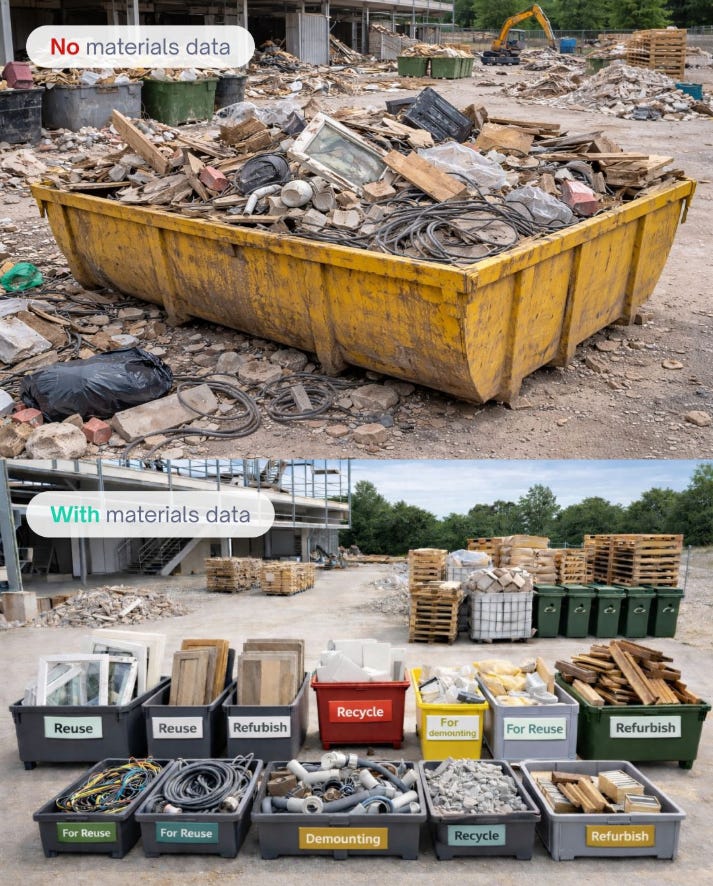
To be honest, I have no idea if the bottom photo is real or AI generated (it’s hard to tell these days!), but the takeaway is the same regardless.
The first photo makes it seem like all of the materials are purely garbage. They are dusty, tangled up and piled so deep that you can’t even see if there’s anything worth saving.
Any demolition site supervisor would look at that mess and feel overwhelmed by trying to do anything with it other than hauling it to the landfill.
But the second photo provides a much clearer direction. The bins not only help to separate the materials, but they guide people to find another purpose for them. Instead of getting tossed, these materials now have great potential for reuse, recycling or refurbishment.
It’s a simple shift that has the power to transform “waste” management into resource management.
Now, I think it’s a safe assumption that most of the people reading this blog (myself included) are not in the construction industry.
So why am I sharing it with you?
Because it is a perfect illustration of a system and mindset you can easily apply to your own household, much like I did very recently.
Take a look at this scene below. This is what my daughter’s closet used to look like not long ago.
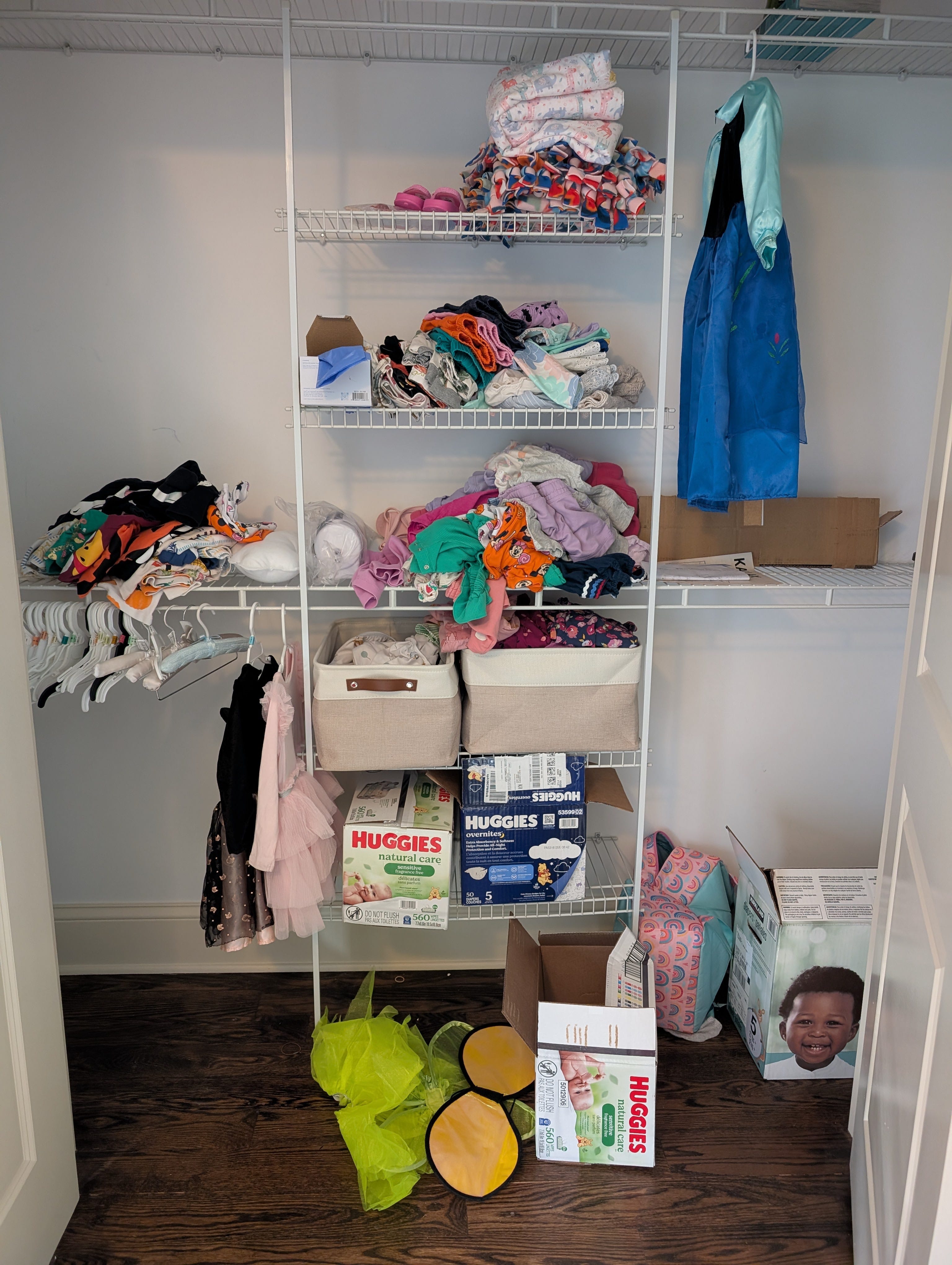
There is a mish-mash of clothes, sheets, bathing suits, blankets, things that fit, things that don’t fit, things that might fit in a few months. Some random fairy wings and dress up clothes, and tons of wipes and diapers casually strewn about.
As you can imagine, this messy lack of a system has made my life much harder as a parent (especially one trying to be more intentional about our family’s consumption). It made it annoying to find things and time consuming to figure out what my daughter actually needed. And note — this is much cleaner than it used to be, since I had already gone through several rounds of clean outs when I took this photo!
For example, before I organized the Clothing Swap at my kids’ school last year, it took me many hours to sift through their drawers (not pictured above) and closets and separate their clothes into tons of little piles. Then, I basically went through the same exact exercise all over again when I decided to be a consignor with Rhea Lana’s.
I pushed myself to power through these tasks because I was really committed to experimenting with new ways to reduce our waste. But the average parent does not have the bandwidth nor the desire to go through all that effort with any regularity. Nor should they!
In fact, the number one thing I’ve heard over and over again from parents who *want* to participate in things like swaps and consigning (but end up not participating) is that they didn’t have enough time to prepare. Boy do I feel that in my bones.
But let’s go back to the demolition photo for a second.
What if the answer wasn’t spending more time (which no one has) on digging through our kids’ things constantly — but creating a better system to separate their stuff for its next purpose instead?
Ok, so now’s the part where you pretend we’re on The Home Edit on Netflix and it’s time for the big reveal…
Here is my daughter’s closet again, but with a simple new system in place:
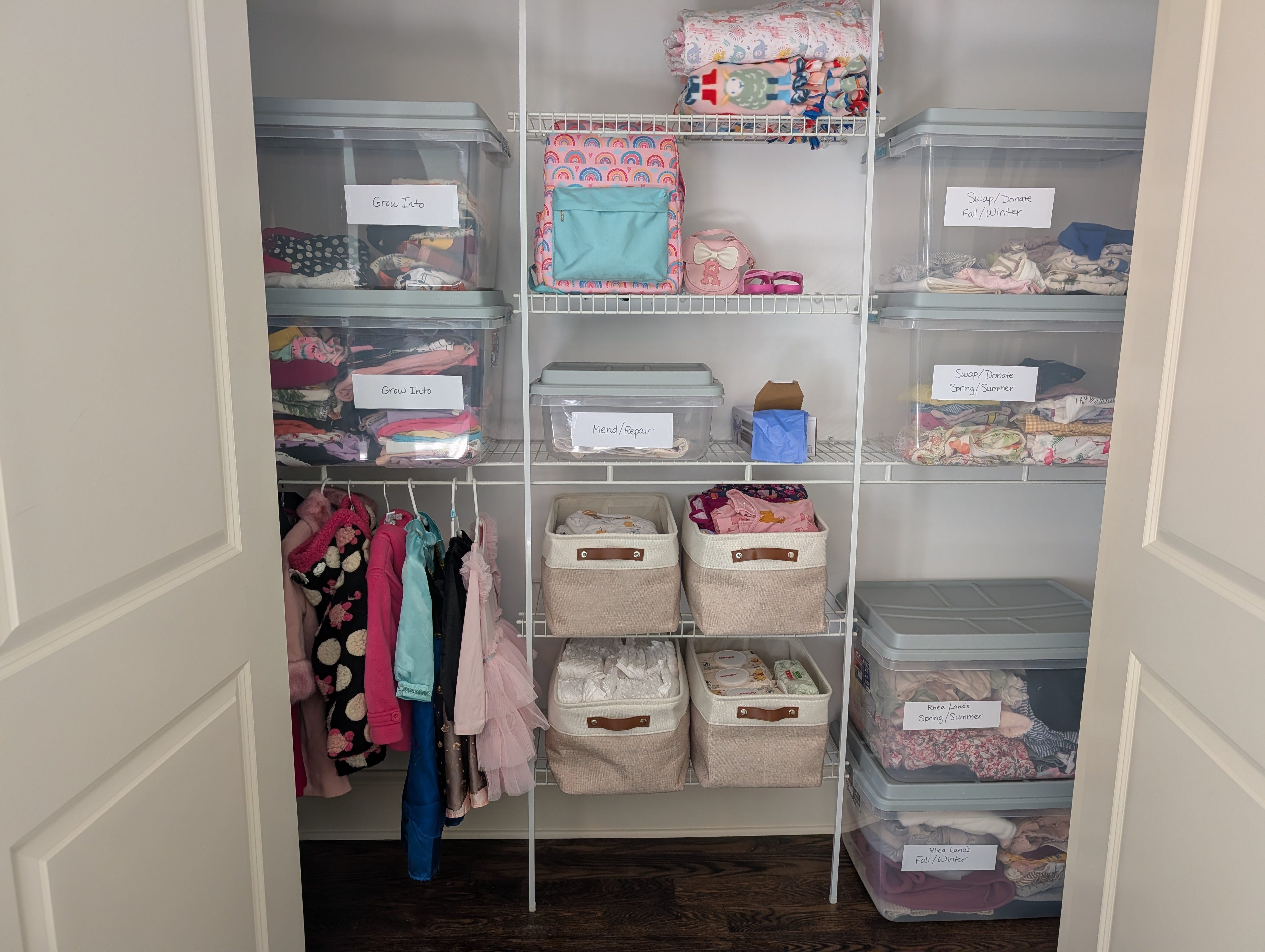
Much like the “after” version of the demolition site, everything now has a label, a purpose and a destination. I can easily see what we have, what we need, and where it should go when I’m done with it.
Not pictured are two other bins in my own closet marked “The Rejects” and “Donate”. (Read my last post about “The Rejects” here).
I know, I know. Your inner Miranda Priestly might pause here and say, “Plastic bins? For organization? Groundbreaking.”

But let me tell you — it is a small shift that has made a big difference in my life as a parent.
I didn’t just put things in bins and reduce clutter. I gave myself clear direction and, most importantly, minimized friction in any future decision making.
Now, when I want to consign (which I’m doing as we speak), I’m ready.
When I want to go to a swap, I’m ready.
When I need to put aside clothes for my younger daughter that my older daughter has outgrown, I can do that super efficiently.
When I notice my own “Rejects” pile getting unwieldy, I can fill up a Take Back Bag. (Read more about those here).
When there are a bunch of things in the mend/repair pile, I’ll call up grandma to come for a visit with her needle and thread. 😂
Having this simple system in place has meant that I’m no longer caught on my heels, feeling overwhelmed about going through a constant cycle of clothes every three months. I’m now on the balls of my feet, easily able to make the intentional choice my default one.
While the initial setup took a small investment of time and energy, it is now paying dividends in the form of reducing my mental load. And that is as precious a commodity as gold bullion for parents as far as I’m concerned.
I’ve even started using separate bins for things like light bulbs, batteries and empty makeup containers so I can keep track of these things for responsible disposal instead of having them spread out in random places all over the house — but I’ll cover these in a future post!
So whether you’re a fellow parent of young kids, or just someone who has been avoiding cleaning out their closets like I had for far too long, here are a few takeaways for implementing a similar system in your own household:
✅ Figure out which categories align with your needs and goals. For my kids, this was Consign, Swap/Donate, Grow Into, and Mend/Repair. (As I mentioned, I also have separate categories for my own closet: Donate and The Rejects). But yours might be something like Donate, Sell, Hand Down. It all depends on your goals and needs — which are totally up to you!
✅ Define the destination and criteria for each category. In my house, anything gently used or like-new that has higher resale value goes to Rhea Lana’s consignment sale. Anything in gently used or good condition with lower resale value goes to Clothing Swaps or gets donated to a local charity. Threadbare items that are beyond repair (AKA my “Rejects”) go into a Trashie Take Back Bag (learn more about those here). If it helps, you can also make notes on the bin label itself with the criteria for each so you can clearly see it and remember.
✅ Place each bin in a location that makes it convenient to fill. I keep most of the kids’ clothes bins in my daughter’s closet, but I put my battery and light bulb bins in the laundry room (for some reason we’ve always kept extra light bulbs there — don’t ask), and my makeup bin in my bathroom cabinet. I keep separate Rejects and Donate bins for the adults in my own closet since that is the most convenient place for us to easily pop things in there.
✅ Monitor the bins on a regular basis. Once the bins are full, it’s a good forcing function to actually put it in your car and take it to the place it’s intended to go (instead of having it pile up in your closet). It doesn’t hurt to have extra bins in case of overflow for things that have set dates (like Rhea Lana’s).
I hope this simple shift helps make your brain and closets feel less cluttered. And more importantly, I hope it makes you feel more empowered to be intentional about what happens next to the valuable resources lying around your home.
Have you tried any other simple organization hacks that work for your family? Please let me know in the comments!
Until next time,
Jenny